 Plott
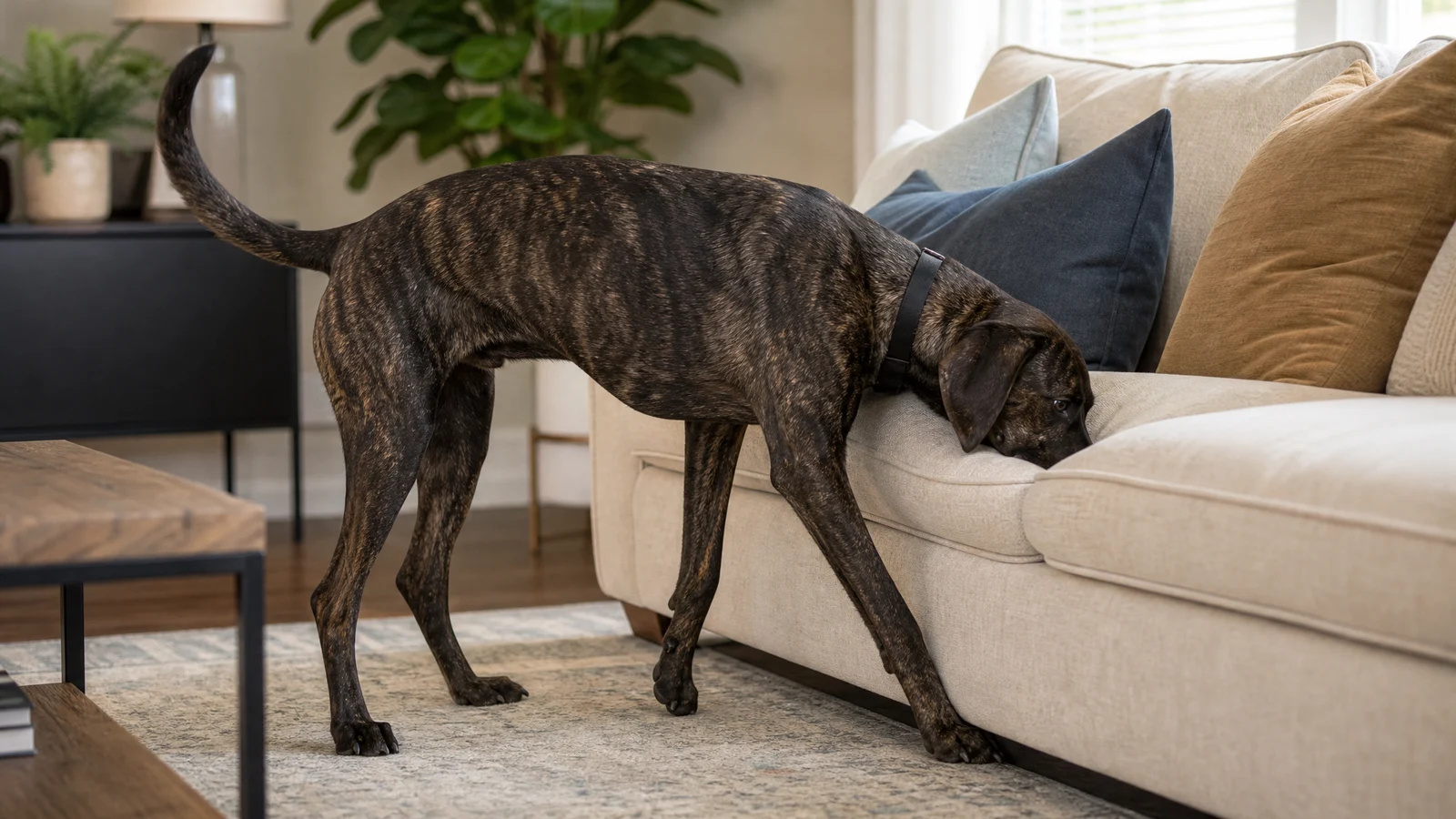
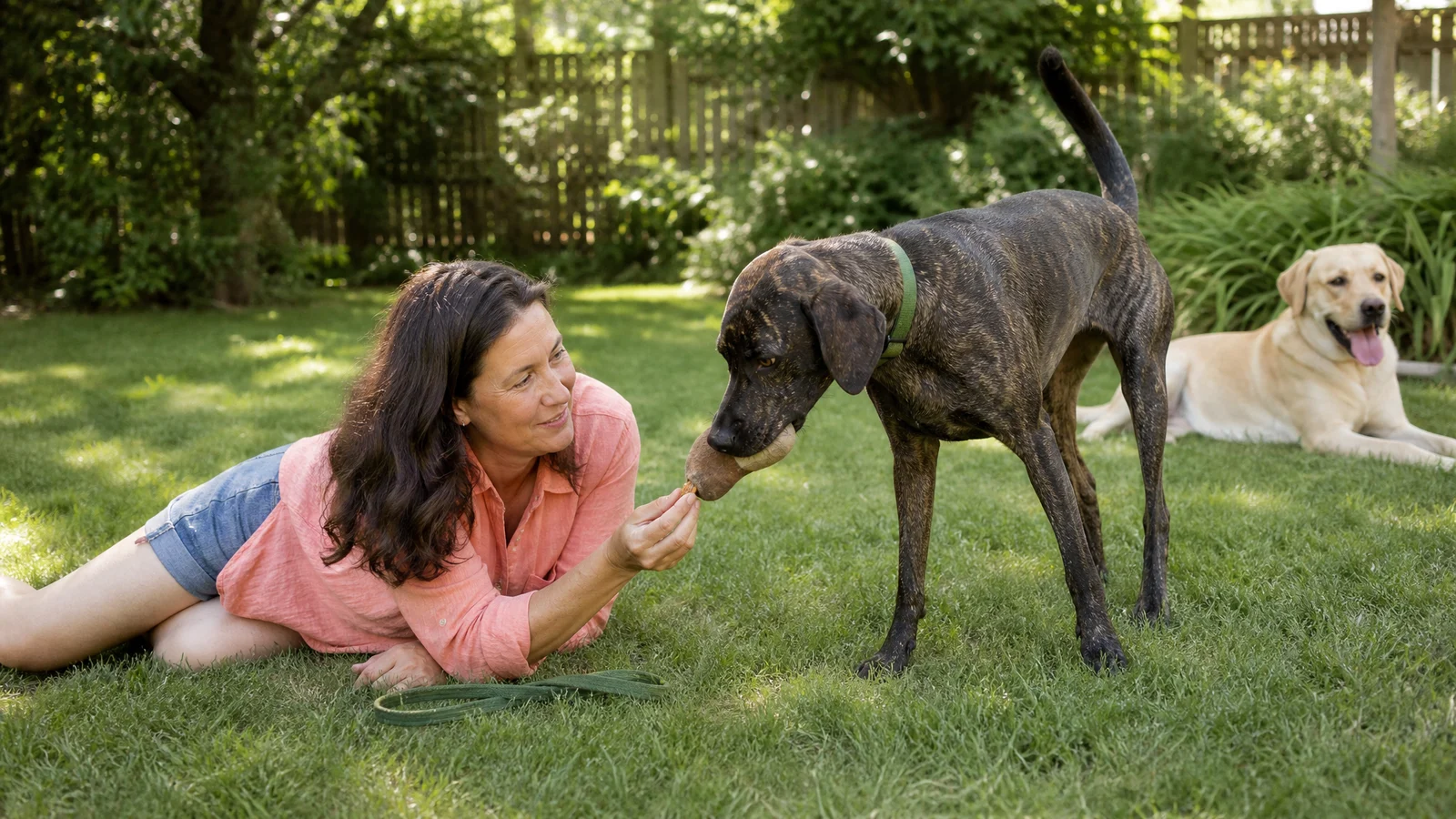
Your Plott Hound takes a treat, trots across the room, nose-pushes it under a couch cushion, and comes back looking pleased with themselves. Nothing is broken here. This is caching, an inherited habit of saving food for later, and it shows up readily in a smart hound bred to work with their nose.
What matters is your reaction. Met calmly, stashing stays a funny quirk. Met with grabbing and hovering, it can slide into the food and toy guarding that Plotts are prone to. We have trained this breed for many years, and the routines below are the ones we would set up in your living room.
In this article, we'll go through why Plotts cache, how to answer each favorite hiding spot, how to spot early guarding, and the trade routine, smaller treats, and chew setup that keep stashing harmless.
Why Plott Hound Treat Stashing Is Natural Caching
Caching is the habit of saving surplus food for later, and dogs inherited it long before anyone filled a bowl twice a day. Your hound carries that wiring even though meals never run out. A treat that is too big to finish, too good to gobble, or handed over when they aren't hungry flips the switch. The instinct says to carry it somewhere safe and cover it.
The breed makes the habit more likely. Plotts are smart, they score 4 of 5 for energy, and they need mental stimulation or they find ways to amuse themselves that you may not enjoy. Carrying food off, pushing it under something, and sniffing it out later is a complete scent game. A hound with a trailing nose can play it all afternoon.
That is why we disagree with the common advice to snatch every stash so the dog learns it was never theirs. Reaching toward a hound who just hid something teaches that approaching hands mean loss, and Plotts may become food or toy aggressive if that lesson sticks. Hiding is the normal part. Guarding is the part to watch.
Training Responses for Cushion, Bedding, and Yard Burying
Where your hound hides things tells you what problem they are solving. Each spot calls for a slightly different response, and none of them calls for a standoff or a chase around the furniture.
Couch Cushions and Furniture
Cushion hiding usually follows a handout. The Plott shoves a chew deep under a cushion, circles back to check, and lies beside the spot. Shrink the supply by giving one chew at a time on a mat while you stay in the room. Collect any stash while your hound is busy elsewhere, such as at dinner or out in the yard, so nobody negotiates over the couch.
Bedding and Blankets
Pawing a blanket into a heap over a treat is the indoor version of digging. Soft bedding smells like your family, so it makes a fine vault. Offer a better one. A snuffle mat with treats tucked into fabric strips lets the same pawing and nosing earn food, and you control the refills. Check beds regularly, because a forgotten stash goes stale and that nose will find it anyway.
Yard Digging
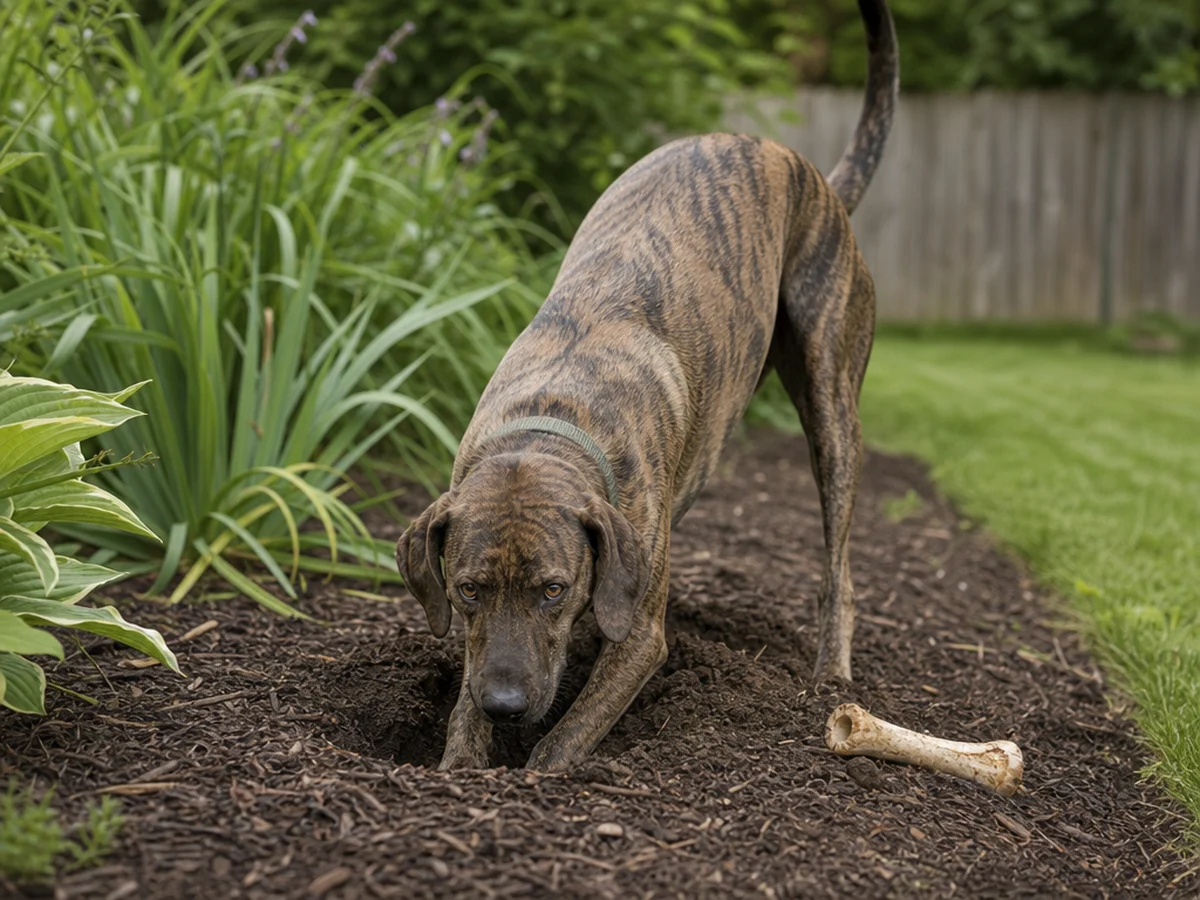
Digging at a fence line or in flower beds is caching at full volume. Make one digging spot, a patch of loose soil or a sandbox, and bury a few treats shallowly while your hound watches. Say your marker word the moment their paws start working there, then reward. If they choose another spot, calmly lead them back. Supervise yard time until the habit settles and keep the base of the fence secure.
Plott Hound Guarding Around a Hidden Stash
Hiding becomes a problem when your Plott Hound defends the stash instead of simply leaving it. Because the breed can turn food or toy aggressive without training, learn the early signs while they are still small:
- A freeze, a hard stare, or a body that goes stiff and low over the hiding spot.
- Hovering near the cushion or bed and returning to check whenever someone walks past.
- Gulping the item or snatching it up and hurrying off when a person enters the room.
- A lifted lip or a low growl when a person or another dog comes near.
Treat a growl as information, not rudeness. Respond by calmly adding distance, because a hound who learns to hide warnings gives you less notice next time. Raised hackles alone can mean arousal rather than threat, and our guide on why the hair stands up helps you read the rest of the body.
While you train, manage the risk. Give chews in a quiet room behind a door or gate, away from other dogs. Plotts do best with young children under supervision, so keep kids out of the chew area entirely. Pick up chews and toys before guests arrive instead of negotiating in front of them, and skip testing games like reaching into the bowl.
Training Calm Trades Instead of Taking Treats Back
A trade turns your approach into good news. Plotts are smart, willing learners with a trainability score of 4 of 5, so this routine often clicks quickly. Reward-based work rests on a cue, marker, and reward: you ask, mark the instant your hound lets go, and pay. Always trade up to something better than what they hold.
- Start in a calm moment with a dull item and a great treat, when nothing is being guarded.
- Walk up from the side rather than head-on, say your trade cue, and hold the treat at their nose.
- The instant they let go, mark and feed, then hand the item back most of the time.
- Raise the item's value slowly, from a dull toy to a chew to a favorite bone, only when each level stays loose and easy.
- Add a drop cue once the release is automatic, and show the treat only after the drop.
- Try a real stash last, from a distance that keeps your hound relaxed, tossing treats away from the spot so they step off by choice.
Handing the item back is what makes the system work. A hound who learns that trades usually end with the item returned stops seeing them as theft. Reward the step away every time, and keep your body soft, your voice calm, and your movements slow. If your hound stiffens at any step, you moved too fast, so go back one stage and add distance.
Reward-Based Training With Fewer, Smaller Treats
Hoarding drops when there is less to hoard. Cut treats into pieces your hound finishes in a bite or two, hand them over one at a time, and count them against the day's food so they are not an add-on. A Plott who is still interested in the next piece has little reason to carry the last one off and bury it.
Save your best rewards for the work that matters. Use plain, everyday pieces for sit and recall, and keep one truly high-value food for trades only. Tiny amounts of something your hound adores do more than a big ordinary handful, and they keep the trade exciting without creating a surplus to stash.
Shape the habit by paying for what you want repeated. When your hound eats a treat where you served it, or drops a chew and looks to you, reward at once. Scattering a few small pieces across a snuffle mat or inside a food puzzle lets that nose do the hiding and finding, and the payoff stays with you.
Gentle methods also keep sessions pleasant. In a 2020 PLOS ONE study that followed 92 dogs, those trained at reward-based schools panted less and stayed looser and showed smaller cortisol rises after training. A relaxed hound is far less likely to treat a treat as something to defend.
This is general information, not a feeding plan. Ask your veterinarian how many treats fit your Plott Hound's daily food, especially if weight or appetite is a concern.
A Plott Hound Training Setup for Chews and Toys
A few fixed habits in the house do most of the work, so set them up before the next chew appears. Plotts are affectionate with family and rated very good with other dogs, which makes a predictable routine easy to teach to the whole household:
- Pick a chew spot, a mat or bed in a quiet corner, use it every time, and stay in the room while your hound chews.
- Put out only a couple of chews or toys at a time and rotate the rest out of sight so each one feels fresh.
- Give your hound a legal stash, such as a low basket or box lined with a blanket, where you hide a few treats for them to find.
- Feed meals at set times in a set place, and end each chew session with a calm trade before you pick up what is left.
- Offer a daily food puzzle, snuffle mat, or sniffing game to feed the breed's mind and nose.
- Have everyone use the same trade cue and release word, and teach children never to take items or approach during a chew.
Some Plotts carry a chew around without hiding it, so read the context. Pacing, panting, and checking on you suggest an unsettled hound, so look at what changed in the routine. A bounce and a play bow is an invitation to chase, and chasing turns carrying into keep-away, so trade calmly instead. If your hound carries a chew to the door and then bays, that is a separate message, and a Plott Hound's carrying bay deserves its own plan.
With more than one dog in the house, items travel because they are contested. Feed and chew in separate spots, and see our guide to polite sharing between dogs for the next steps.
Judging Training Progress and Knowing When to Get Help
A Plott's quick mind and nose are why stashing happens at all, and the same traits make the fix straightforward. Keep the supply small, give that nose real scent work, and teach everyone in the house to trade instead of take. A hound whose instincts have an outlet has little reason to defend a cushion. After a few weeks of steady routine, look for calm, boring behavior around items.
You will know the routine is working when your hound keeps a loose, relaxed body as you walk up while they hold an item, and when they drop it willingly and look to you for the payoff. Cushion stashes and yard digging should become less frequent as puzzles and snuffle mats meet the need, and family members and other dogs should be able to pass by without a stare, a freeze, or a growl.
Keep up regular vet visits, since a sore or unwell dog can guard more than usual. Ask a qualified reward-based trainer or your veterinarian for help if you notice any of these:
- Stiffening, a hard stare, or freezing over a stash or a toy.
- Growling, a lifted lip, or snapping when someone approaches.
- Guarding that spreads to beds, people, or whole rooms, or gets worse despite calm routines.
- A sudden change, such as new guarding, a drop in appetite, or frantic hoarding that was not there before.
- Any close call with a child.
 BehaviorWhy Does My Plott Hound's Hair Stand Up on Their Back?
 BehaviorPlott Hound Behavior With Other Dogs: Sharing Food and Toys
 Puppy trainingWhat to Work on When Your Plott Hound Puppy Is 5 Months Old