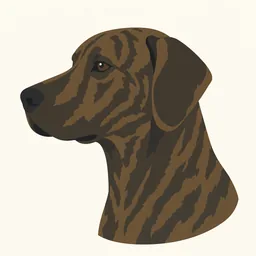
 Plott
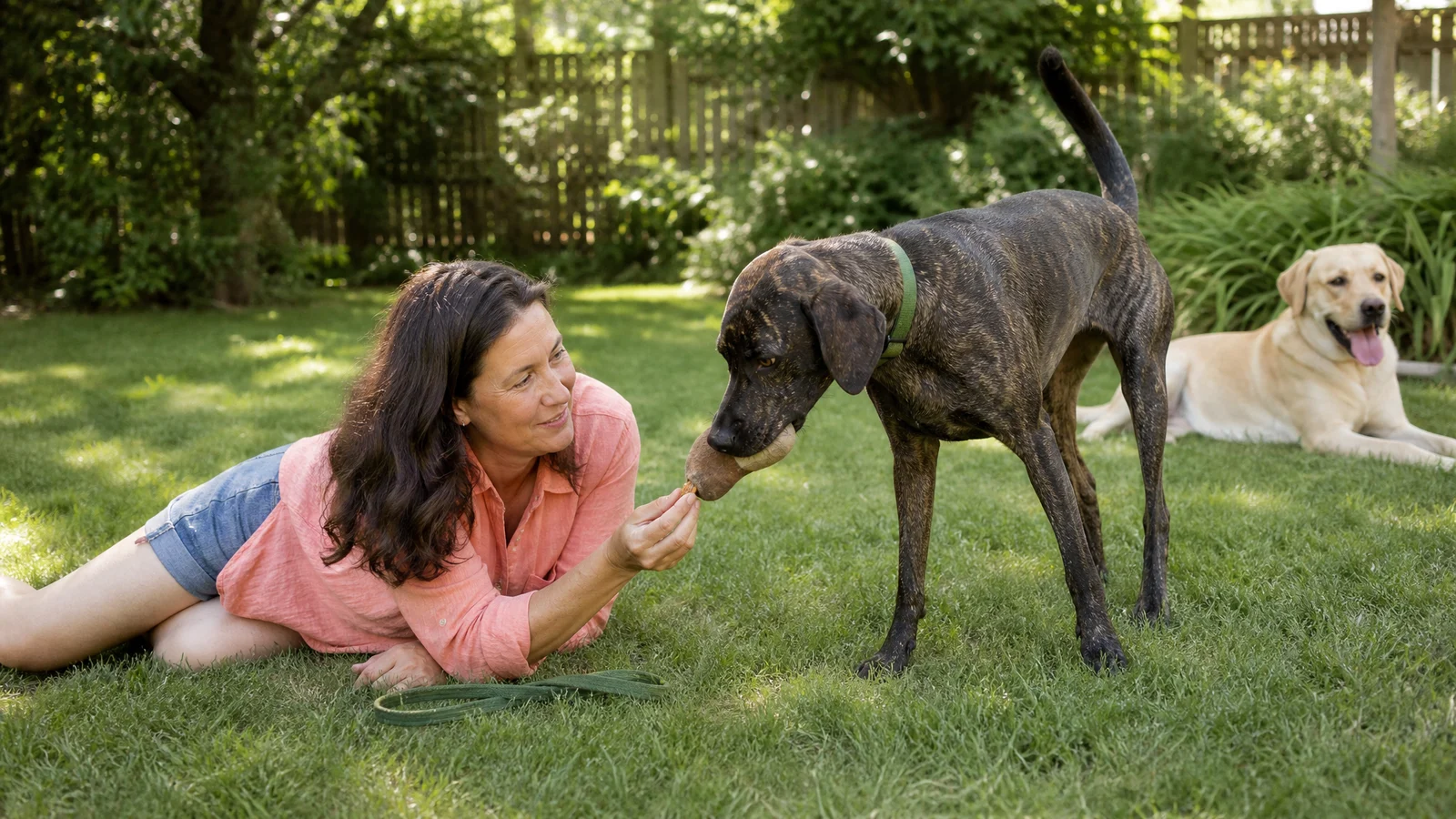
The AKC rates the Plott Hound 5 of 5 with other dogs, and the usual advice stops at "they love company." Daily life with the breed adds a wrinkle. A hound who greets every dog with a loose, wagging body can still go rigid over a bowl, a bone, or a squeaky toy.
That gap matters because guarding left alone hardens into habit, and a dog who loved company slowly becomes one the household manages around. Handled early, the same hound hands things over cheerfully and stays easy with every friend.
We'll walk you through why friendliness and guarding can coexist, then the core method of early socializing, a trade game, and rewarded calm. After that come four household case files covering a small apartment, toddlers in the house, a pair of dogs under one roof, and a long workday away, and we finish with what to expect over the years.
Friendly Plott Hounds, Guarded Bowls
Sociability and resource guarding are separate traits, and a Plott Hound can carry the first in full while showing the second. The breed's own profile cautions that Plotts may become food or toy aggressive and need training to avoid it. The dog who adores every dog at the park is often the one nobody thinks to watch near a bone.
Several traits feed the pattern. Energy rates 4 of 5, and a bright hound with too little mental work invents entertainment, which can include defending a prized item. Watchdog and protective nature also rates 4 of 5, so a dog who tracks what belongs to them is acting in character.
Diagnose by timing. If guarding shows up mostly after quiet, low-exercise days, add exercise and puzzle work before you touch the feeding routine. If it appears whatever the day looked like, the item itself is worth too much and needs a trade plan.
This is general information, so check with your veterinarian before any medicine or diet change.
Disposition varies among strains, so a neighbor's Plott may share differently from yours. We have trained this breed for many years, and the sequence that suits every line is distance first, then value, then closeness. This article covers freezing over a bowl, chew, or toy, refusing to let go, and tension when a dog or child approaches. Fights that already cause injuries need a qualified behavior professional in person.
Socializing and Sharing Basics
Three skills carry every case file below: gentle early exposure, a trade game that makes letting go pay, and rewarded calm near other dogs' belongings. Learn to spot discomfort too, since it tells you when to slow down. The same steps suit a puppy or a newly adopted adult.
Early, Gentle Socializing
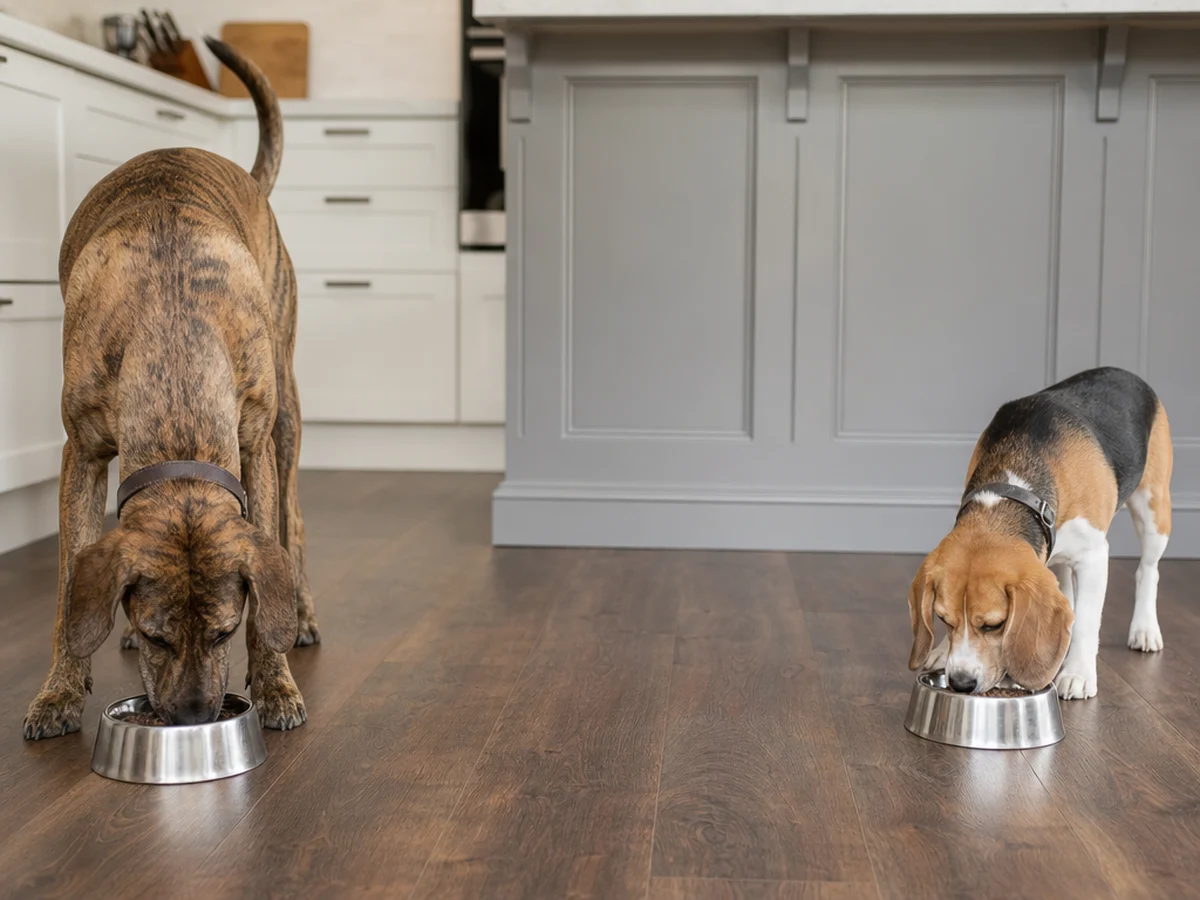
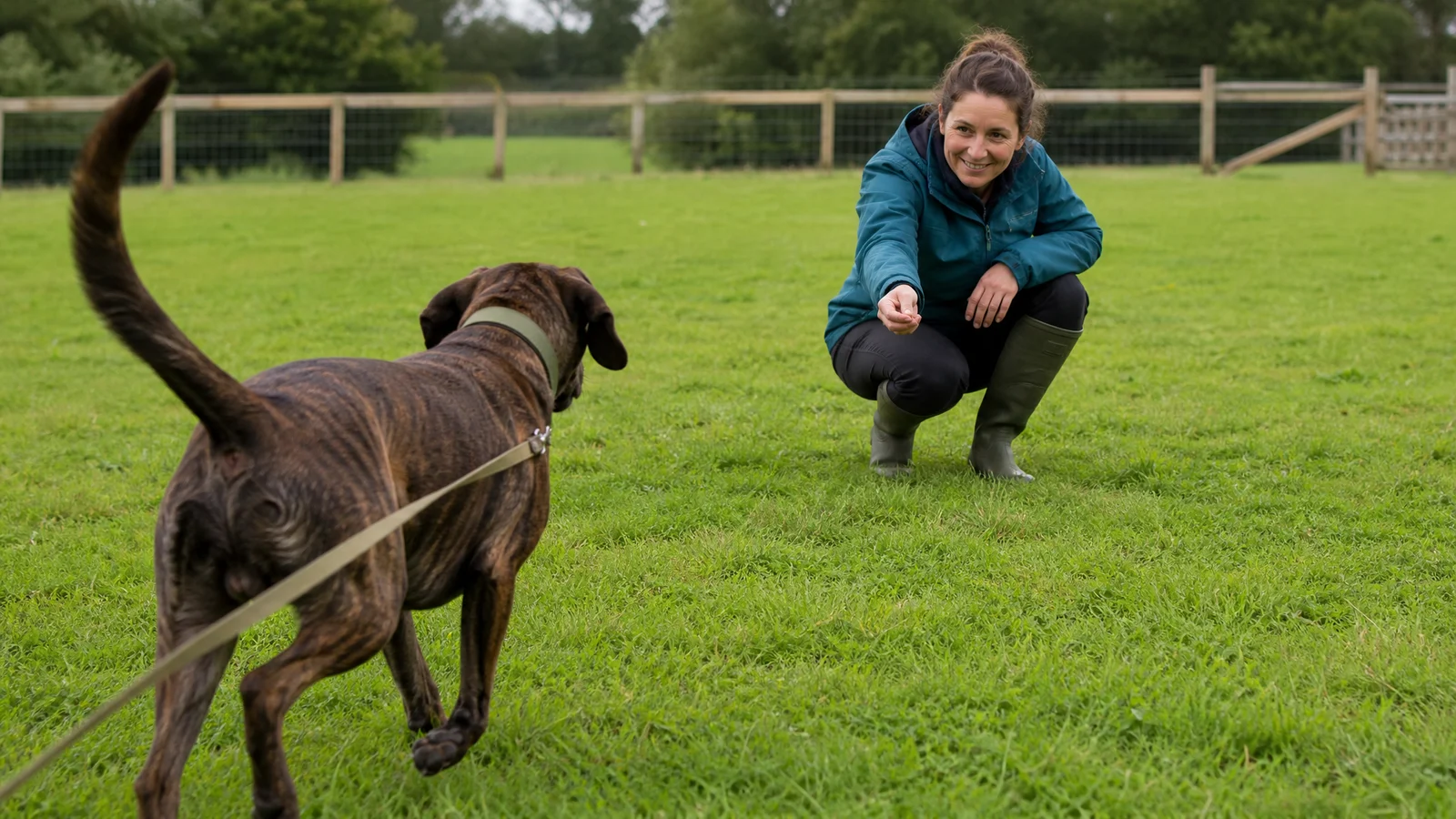
Puppies should meet a wide variety of people and other animals, gently and thoroughly. Start with relaxed, dog-savvy adults and begin far enough apart that your puppy still happily eats treats while looking at the other dog. If both bodies stay loose, allow a short sniff, then walk on together before anyone gets wound up.
Vary size, age, and coat so the lesson becomes "dogs are fine" rather than "my one friend is fine." The breed is extremely prey driven, so keep a leash on during introductions and use a gate or generous space with smaller pets. If either dog stiffens, add room instead of pushing through.
Signs a Dog Is Uncomfortable
Your dog and the dog they meet both give signals well before a growl. Watch for these:
- A freeze with weight shifted forward and the body gone still asks for more space.
- A hard stare, or a mouth that was soft and open and now closes, means tension is rising.
- Lip licking, yawning, or turning the head away with no other cause signals unease.
- Showing the whites of the eyes, or a tail held stiff or tucked, says the dog wants out.
- Raised hackles or a lifted lip means you end the meeting calmly right now.
One signal alone may mean little, but a cluster means add distance. If the signs appear only around food or toys and not around dogs in general, you are looking at a resource problem, not a social one.
The Trade-Up Game
Start in a quiet room where no other dog is present, with a toy your dog likes but does not love and a treat they like more. This is reward-based training, where paying for a behavior makes it likelier to return. Move on only when the current step feels easy:
- Hold the treat at your dog's nose while they have the toy, and mark the instant the mouth opens.
- Give the treat, then hand the toy right back so letting go never feels like a loss.
- Repeat until the toy drops as soon as the treat appears.
- Add a cue such as drop just before the treat, then later say it first and show the treat only after the toy lands.
- Place another dog across the room, leashed or behind a gate, and repeat. Close the gap slowly, and step back if your dog freezes.
If your dog clamps down, skip the tug and reach-in. Offer something clearly better, wait, and make the next trade easier with a duller toy. If the drop works alone but fails with another dog present, the cue is not fluent there yet, so lower the difficulty rather than repeating the request.
Paying for Calm Near Other Dogs' Things
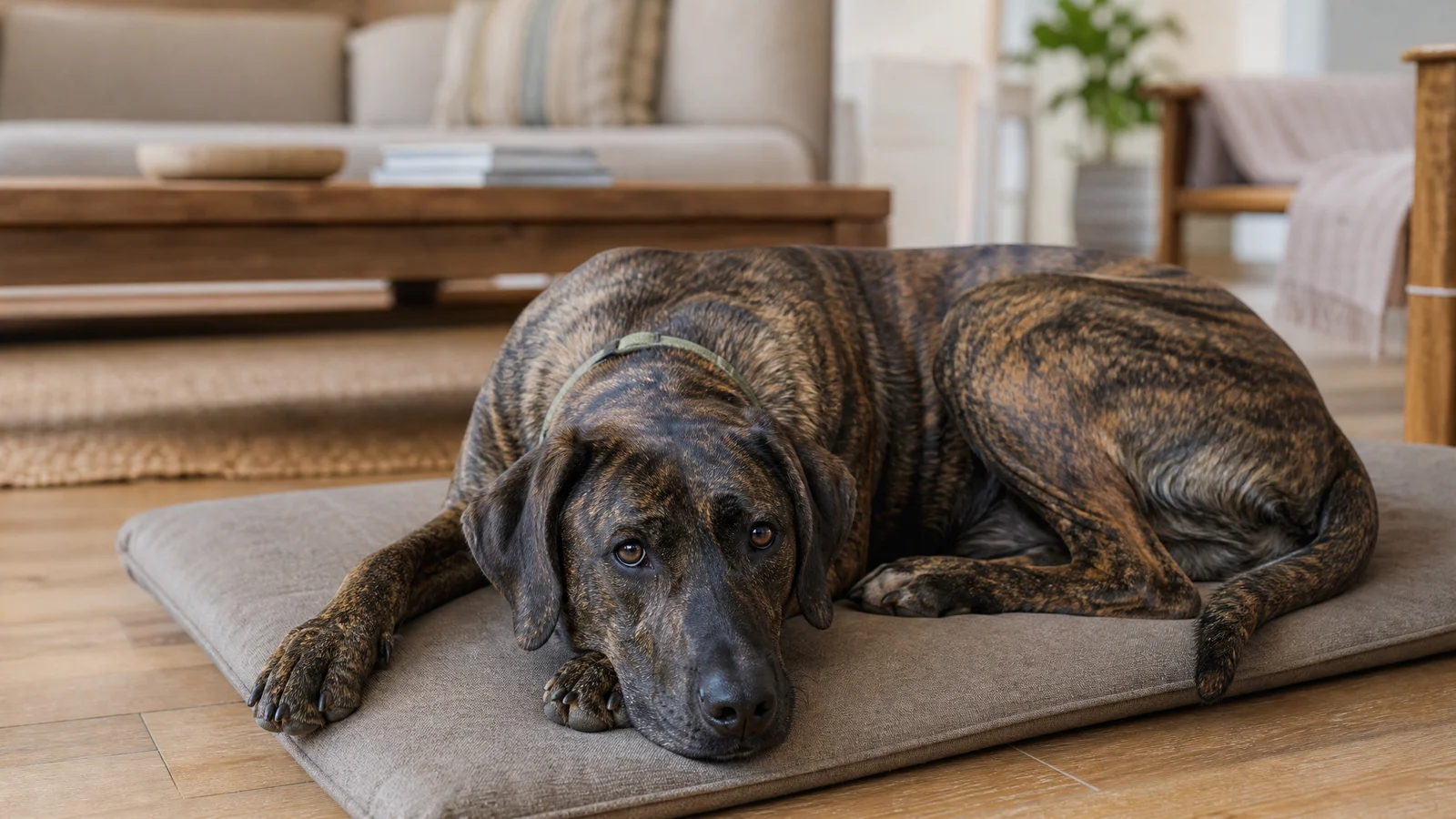
Use a marker word the moment your dog settles, glances at another dog and back to you, or lies down at a distance, then follow it with a treat. Trainability rates 4 of 5, so most Plotts catch on fast.
When your dog is too excited to accept a treat, you are standing too close. Back away until food matters again, then shrink the gap across many sessions. A leashed walk beforehand helps, because a tired, occupied brain settles sooner.
Small-Space Socializing and Sharing
Case file one is a Plott Hound in a small apartment, where there is little room to walk away from anything. Tight quarters raise the value of every resource, so let the layout do some of the teaching.
Start with the feeding spot. If your dog eats where people pass, move the bowl to a corner or a closed bathroom. If they finish calmly there, keep it. If they freeze when someone walks by, widen the path before changing anything else.
Rotate chews instead of leaving a pile out. Offer one at a time in a set place and collect the rest, so nothing sits in a hallway as a contested prize. A walk and a food puzzle beforehand help, since 4-of-5 energy in a small space fixates on whatever is within reach.
The door is the next pressure point. Ask for a sit or a mat before it opens, and reward the greeting only while the leash is slack. Barking rates 4 of 5 for the breed, so a calm entrance helps with neighbors too.
On the sidewalk, keep your dog leashed because of the strong prey drive, and curve away early. If your dog lunges toward every dog, add distance instead of waiting for calm at close range. Allow a short sniff only with relaxed, loose-bodied dogs.
Toddlers, Toys, and Socializing
Case file two is a home with young children, where pressure comes from small hands as much as from other dogs. The breed rates 3 of 5 with young children, the "with supervision" point, and sharing rules are where supervision pays most.
Begin with toy ownership. Give dog toys one bin and child toys another, and keep the two sets clearly different in size and color. A dog allowed to chew a stuffed animal cannot tell it from a doll left on the floor, so tidy rules head off arguments.
Next, set a no-grab zone around the bowl, bed, and chews. Everyone in the house follows these rules:
- Meals and chews happen behind a gate or closed door, with children elsewhere.
- Children never take anything from the mouth or dish, and an adult handles every retrieval with a trade.
- If your dog stiffens as a child walks past, the zone was too small, so enlarge it.
- A crate or gated spot stays open as a retreat, and children leave a dog there alone.
Then teach children to trade rather than take. An older child can toss a treat away from the dog and pick up the dropped item only after the dog moves off, with an adult beside them. Younger children watch and drop treats on cue while the adult makes the trade, and every child earns praise for walking away from a dog holding something.
Socializing Plott Hound Housemates
Case file three is a two-dog home, where the pair see each other's food and toys daily and a mistake costs the most. Common advice says to let dogs sort it out, but a Plott Hound already stiff over a resource learns from rehearsal, so give them structure. The plan runs in three stages.
Feeding Apart
Feed in different rooms or behind a closed gate, and lift bowls once both dogs finish. If one dog finishes early and heads for the other bowl, use a door or gate rather than blocking with your body. After a long calm stretch, move the bowls closer by small steps, and return to the last easy spot if either dog stiffens.
Separate feeding is not a failure. It can stay permanent, and it helps the dogs stay easy friends the rest of the day.
Managing High-Value Items
Stuffed chews, bones, and anything strongly scented stay out of shared space. Hand them out while the dogs are in separate rooms and collect them before the dogs mix. For everyday toys, buy duplicates, and remove any toy that makes one dog go still and fixated.
If a chew must move, trade for something better so a hand near it predicts good things. Playfulness rates 3 of 5, so short sessions suit a pair better than long wrestling matches. End play while both dogs are still relaxed.
Rebuilding Trust After a Scuffle
If a scuffle breaks out, interrupt with a barrier such as a baby gate or board, or scatter treats on the floor, and keep your hands out of the middle. Once apart, check both dogs for injuries and let each settle in a separate room. Then find the cause: too little distance, an item worth too much, or a dog who was hungry, tired, or overexcited.
Restart at an easier step. Keep the dogs apart around all food and chews for a while, and reward calm in each other's presence at a distance. Allow shared space again only in short, relaxed stretches.
If a normally easygoing dog suddenly starts guarding or snapping, book a checkup, since an otherwise gentle dog can behave aggressively when in pain. Regular vet visits belong on the calendar anyway.
Plott Hound Hours Home Alone
Case file four is an owner out at work all day. The risk here is less conflict than skills fading with no one around to practice them. A smart hound with nothing to do invents a game, and defending a favorite item can become it.
Leave out items that are safe and low value: a sturdy toy, a chew your dog treats casually, and a food puzzle you have used before. If your dog drops these easily in the trade game, they are low enough to leave. If your dog carries one off and goes rigid when you approach, it belongs in the put-away pile.
Put away anything that has drawn tension before:
- Stuffed chews and bones come out only when you are home to watch, and you collect them at the end.
- Any toy that makes your dog freeze or run off stays in a closed cupboard until easy trades have rebuilt it.
- If a sitter or walker helps, hand over the same trade steps and put-away list, because a different routine can undo weeks of work.
Keep skills fresh with a few short evening sessions. Run easy trades, reward a settle when a dog passes outside, and rotate which toys are in use. If your dog seems rusty after a busy week, drop to the easiest step and rebuild, and give real exercise before you leave, since 4-of-5 energy turns to whatever is lying around.
A Plott Hound's Sharing Future
Over the long term, polite sharing becomes dependable with steady upkeep, and a few predictable relapses are normal. Trades and the drop cue turn into habits because they have always paid off, so most dogs hand things over with a relaxed body and little prompting. Treat the routine as part of ordinary life, not a course that ends.
Expect setbacks at predictable points. A new dog shifts the household's balance, and a move or a new kind of chew can raise the stakes. Read a relapse as a cue to review the steps. Go back to separate bowls for a while, run easy trade sessions, and rebuild distance before closeness.
Call a qualified behavior professional if any of these appear.
Those are the signs that it is time to bring in a qualified behavior professional: scuffles that repeat despite good management, a growl that turns into a snap, or guarding that spreads to places and items that never mattered before.
The friendliness is what this breed gives you for free, and it stays when guarding is never rewarded. Pay for the handover and for calm, never for stiffness, and keep exercise and mental work steady. Your Plott Hound will then remain a welcome playmate at the park, at home, and as the years change who is in the room.
 Puppy trainingWhat to Work on When Your Plott Hound Puppy Is 5 Months Old
 Training basicsReliable Recall for a Prey-Driven American Plott Hound
 Training basicsSettle on a Mat: Teaching an Off Switch to a Bold Plott Hound