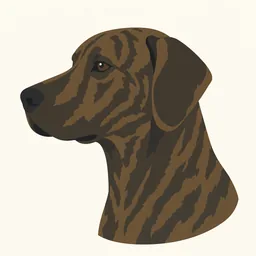
 Plott
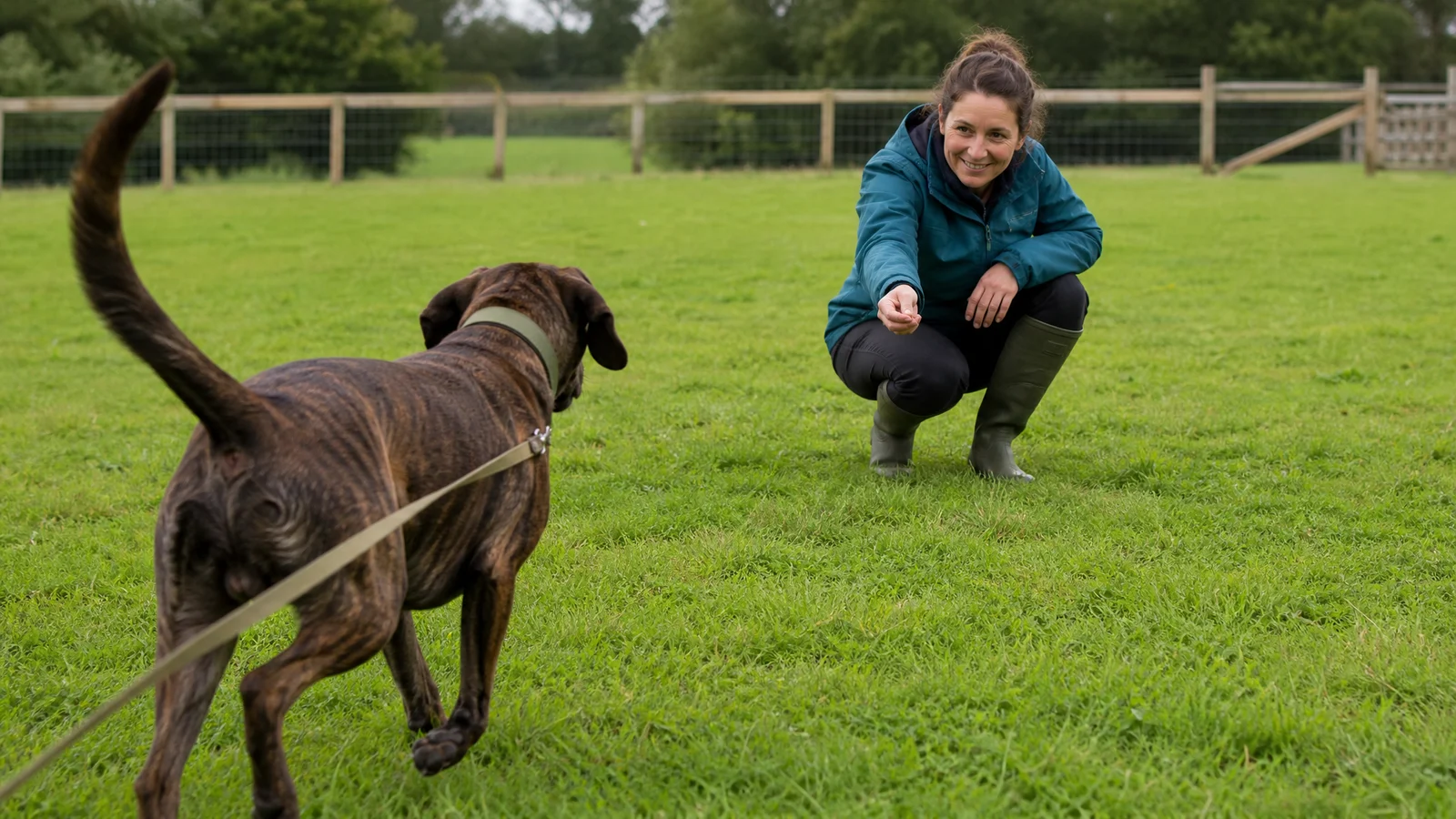
A Plott Hound catches a smell, lowers their head, and seems to let the rest of the world fall quiet. The cue that worked in the kitchen now competes with a history of stamina, determination, and sustained scent focus. The dog has not made a moral choice against the person. The environment changed the value of every option.
Recall training therefore needs a risk decision before it needs a louder voice. This guide routes practice through green, amber, and red zones, then shows how to build an indoor return, add a secure long line, reward arrival, and repair a miss. We build reliability through protected repetitions, while the leash and secure enclosure remain essential safety tools.
Plott Hound Recall Node One Classifies the Risk Zone
Start with containment, not confidence. A fenced room or secure enclosure can be green when distractions are mild. A clear area on a properly handled long line may be amber because distance and scent add difficulty. An unfenced open area, nearby traffic, animals, or unknown hazards makes the scene red regardless of yesterday's performance.
| Zone | Observable conditions | Decision |
|---|---|---|
| Green | Secure boundary, easy orientation, ordinary food works | Train the cue and reward arrival |
| Amber | Secure long line, more scent, response still available | Lower criteria and reward generously |
| Red | No safe containment, fixed attention, hazards nearby | Do not test recall, create safety |
The Plott standard describes stamina, endurance, agility, and determination in the breed's original work. That context explains why scent focus can persist. It does not justify exposing the dog or other animals to avoidable risk, and the modern goal here is safe return.
Zone color can change within seconds. Wind may carry a new odor, a gate may open, or another animal may appear. Reclassify the scene before each repetition. A decision tree is useful only when the handler is willing to leave a branch that has become unsafe.
In every zone, use secure equipment and reward-based methods. AVSAB’s training statement supports teaching the desired response directly. Reward every arrival so returning to the person keeps strong value in an emergency.
Recall Node Two Builds the Return Indoors
Choose a cue that has not been repeated without consequence. Begin across a calm room at an easy distance. Say it once, move away invitingly, mark the moment the dog commits toward you, and deliver several high-value rewards close to your body. The cue should predict a worthwhile return, not the end of everything enjoyable.
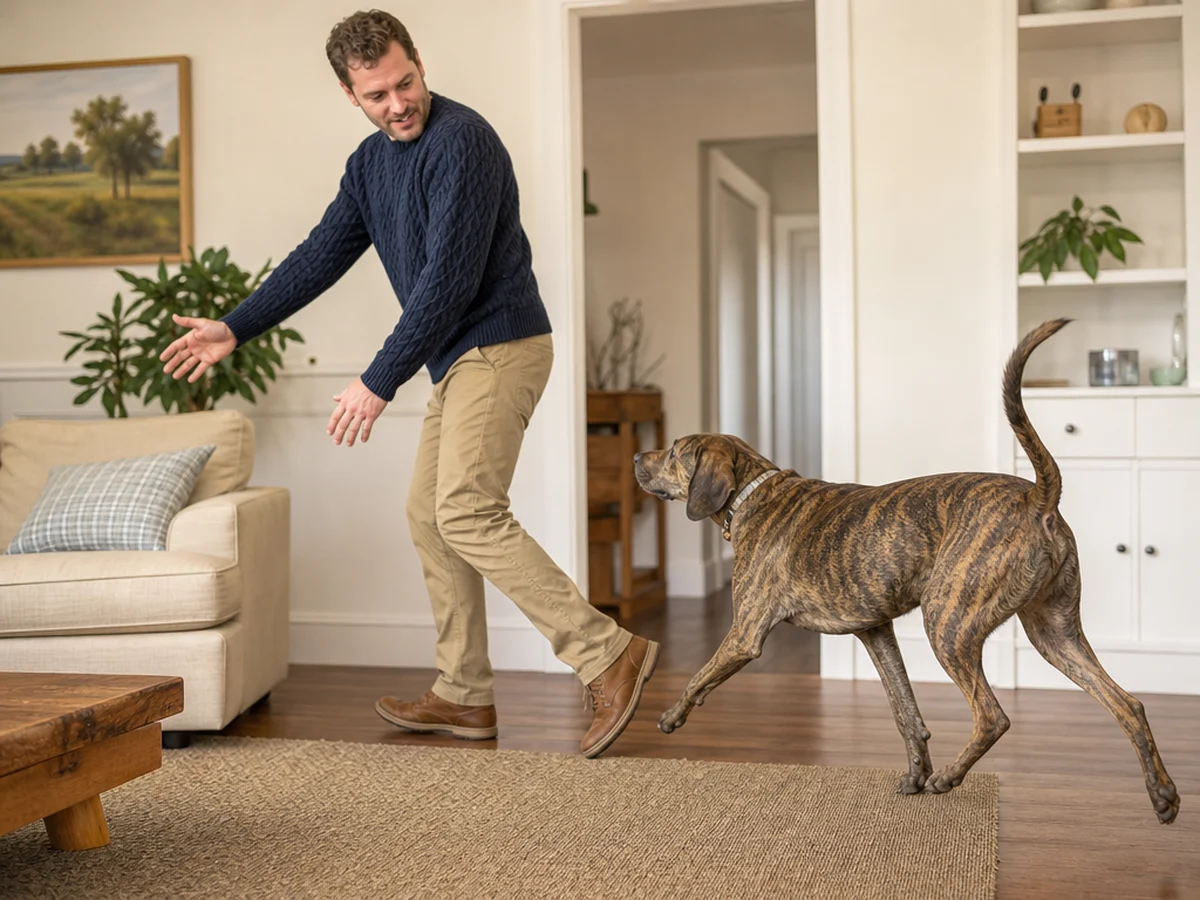
Practice with two people only if both can follow the same rules. One person calls, rewards, and releases before the other takes a turn. Do not call the dog back and forth rapidly until accuracy frays. A few clean returns preserve more value than a long drill.
Make Arrival a Complete Behavior
A return is not finished when the dog passes within reach. Reward near you, touch the collar or harness gently, reward again, then release. This sequence prepares the dog for safe attachment without teaching them to dodge the hand that always ends freedom.
Vary the reward while keeping arrival valuable. Food gives precise payment, praise adds social warmth, and a brief toy game can suit some dogs. A release back to an appropriate sniff is especially powerful because the return becomes a pause in exploration rather than its permanent ending.
Call only when you can support success. If the dog is sleeping, eating, or deeply engaged with something safe, walk closer or wait for a better moment. Early cues should not be gambles. Protect the word while the meaning is being built.
Plott Hound Recall Node Three Adds a Secure Long Line
The RSPCA recommends a long training lead for outdoor recall practice because it gives some freedom without complete free range. Treat the line as safety equipment and distance management, not as a tool for pulling the dog back after a cue.
Choose a clear, suitable area away from traffic, other people, dogs, posts, dense brush, and objects that can catch the line. Attach it to secure, well-fitted equipment. Inspect the clip and material before use. Never wrap the line around a hand, wrist, waist, or any body part.
Begin with much less length than the line offers. Let the dog move and sniff while you feed slack smoothly. Reward voluntary check-ins before calling. When you do use the cue, move away, mark the turn, and reward at your body. Gather the line without jerking as the dog returns.
Let the Line Prevent Rehearsal
If the dog does not respond, the line keeps them from reaching danger or disappearing. Step closer, reduce distraction, or guide the situation toward safety with steady handling. Then rebuild the cue at a shorter distance and make the arrival especially worthwhile.
Do not wait for the dog to hit the end at speed. Monitor the available length and turn before slack disappears. A sudden stop risks injury and can make the equipment frightening. Good line handling is quiet, anticipatory, and secondary to the training plan.
Long-line sessions should remain short. They combine scent, movement, equipment, and recall decisions, which can be mentally demanding. Finish with an easy return, attach the regular leash if needed, and allow calm recovery rather than testing one last difficult cue.
Recall Node Four Chooses the Outdoor Branch
At each opportunity, ask three questions. Is the boundary or line secure? Can the dog turn and eat? Is the route around you clear? If all answers are yes, you may train. If one answer is uncertain, simplify or leave. The branch depends on present evidence, not the dog's best performance.
Green, Amber, and Red Branches
Green branch. Use a familiar distance and one cue. Mark commitment, reward arrival, touch equipment, and release. Occasionally reward a voluntary return without calling. This prevents every approach from depending on a verbal prompt.
Amber branch. Move closer, improve the reward, and ask for one easy return before leaving or releasing to a suitable sniff. The leash training notes explain how to identify the first body change around odor. Work before the dog crosses that scent threshold.
Red branch. Do not call to test whether the cue can defeat the scene. Secure the dog, create distance, and leave. If attention is fixed while they remain safely attached, focus on line handling and movement to safety. Training resumes somewhere the dog can think.
A secure fenced area is not automatically green. Check gates, fence condition, gaps, other users, and local rules. A long line is not automatically amber if bicycles, dogs, people, or obstacles make handling unsafe. Color describes the whole situation, not one piece of equipment.
Use scent interest as a safe reward when conditions allow. After arrival and payment, release the dog to investigate an appropriate spot while still secured. Indoor food searches can also provide controlled scent activity. Best Friends describes starter nose work with easy treat searches in boxes.
Plott Hound Recall Node Five Repairs a Missed Return
A missed recall is evidence that the branch was too difficult, the cue has weak value, or the dog could not process it in that moment. Do not repeat the word, shout, chase, or punish after the dog returns. Those responses can make the next return slower and teach avoidance of the handler.
If the dog is safely on a line, shorten distance without jerking, move away invitingly, and reward the first decision to follow. If safety requires immediate control, manage the line and leave the scene. Separate emergency handling from the later training analysis.
Write what happened before the cue. Record the zone, available line, first body change, distance, reward, response, and recovery. “Amber, head lifted toward odor, called from too far, reconnected after moving away” gives you a plan. “Ignored me” does not.
- Return to a green setting where the cue still produces an eager response.
- Increase reward value and reduce distance for several protected repetitions.
- Reenter amber at an easier location and call before attention fixes.
- End after a successful return and compare recovery with the prior session.
Protect the cue outside training too. Do not use it to announce nail care, isolation, or the immediate end of every walk. Go to the dog when an unpleasant necessity cannot be changed, and build separate cooperative-care cues for handling.
If recall performance changes suddenly, consider health and comfort. Hearing changes, pain, fatigue, or stress can alter response. Keep regular veterinary visits and discuss abrupt changes with a veterinarian before treating them as a training plateau.
Recall Node Six Defines Reliable
Reliable does not mean guaranteed in every environment. It means the dog has a strong history of returning under the conditions in which you practice, while the person continues to manage risk. For a scent-driven Plott Hound, an ordinary leash or secure enclosure remains the safer choice in open public areas.
Track reliability by zone and condition. Count clean responses only when the dog could safely choose, not returns produced by hauling the line. Note response speed, arrival position, collar-touch comfort, and recovery. A trend across similar opportunities matters more than one impressive return.
Do not promote the dog because a calendar date arrived. Add distance, scent pressure, or a new location separately. The how to train calendar treats time as an organizer rather than a deadline. Recall should follow the same rule.
When progress stalls, choose a reward-based professional who can observe line handling, reward delivery, and location selection. Seek direct help sooner if the handler cannot maintain safety, the dog becomes distressed, or the environment offers no workable distance. Good support should reduce risk, not encourage a dramatic test.
Recall Node Seven Chooses the Next Training Question
If the dog struggles before leaving home, begin with the how to train plan and strengthen the marker, release, and name response. Recall depends on those small communication tools. A clearer indoor pattern gives the outdoor cue a stronger foundation.
If scent pressure pulls the dog through the cue, use the leash training threshold notes. They help locate the distance where orientation remains available. That distance is the best place for the next amber-zone return.
If arousal remains high after practice, build the Plott Hound temperament routine in a quiet room. Recovery is part of learning because the dog needs to shift out of active searching before the household asks for another task.
If reward value or timing is unclear, review the Plott training principles. Choose one card, perhaps placement, session length, or changing one detail. Avoid rebuilding the whole recall plan after a single miss.
The decision today is not whether to trust recall everywhere. It is which zone gives the dog a safe, clear chance to return once. Protect that repetition with containment, a valuable reward, a gentle equipment touch, and release. Reliability grows from those choices, while safety never depends on proving the line unnecessary.
 Training basicsSettle on a Mat: Teaching an Off Switch to a Bold Plott Hound
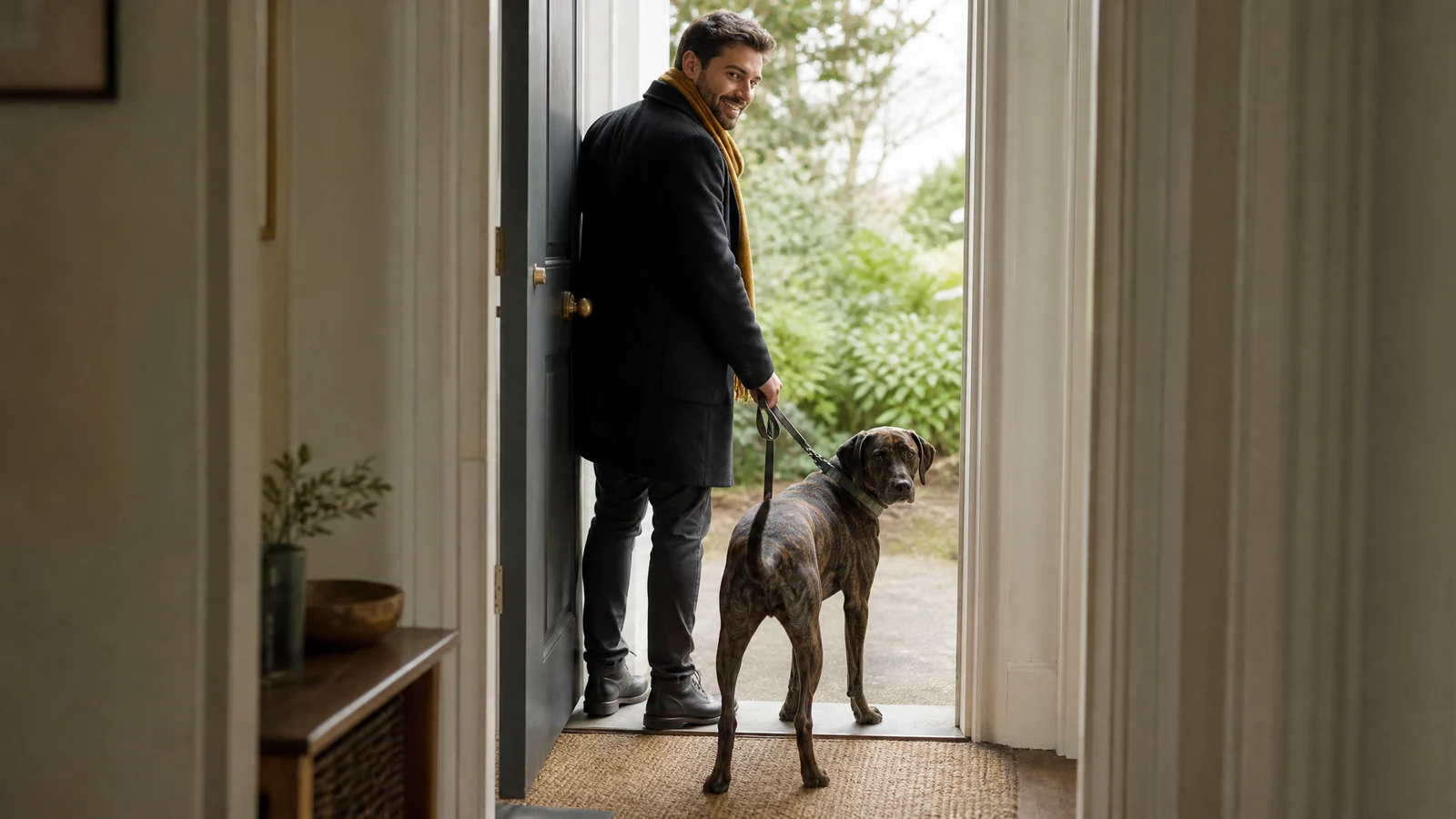 Training basicsReward-Based Plott Hound Training Tips for a Sharp Mind
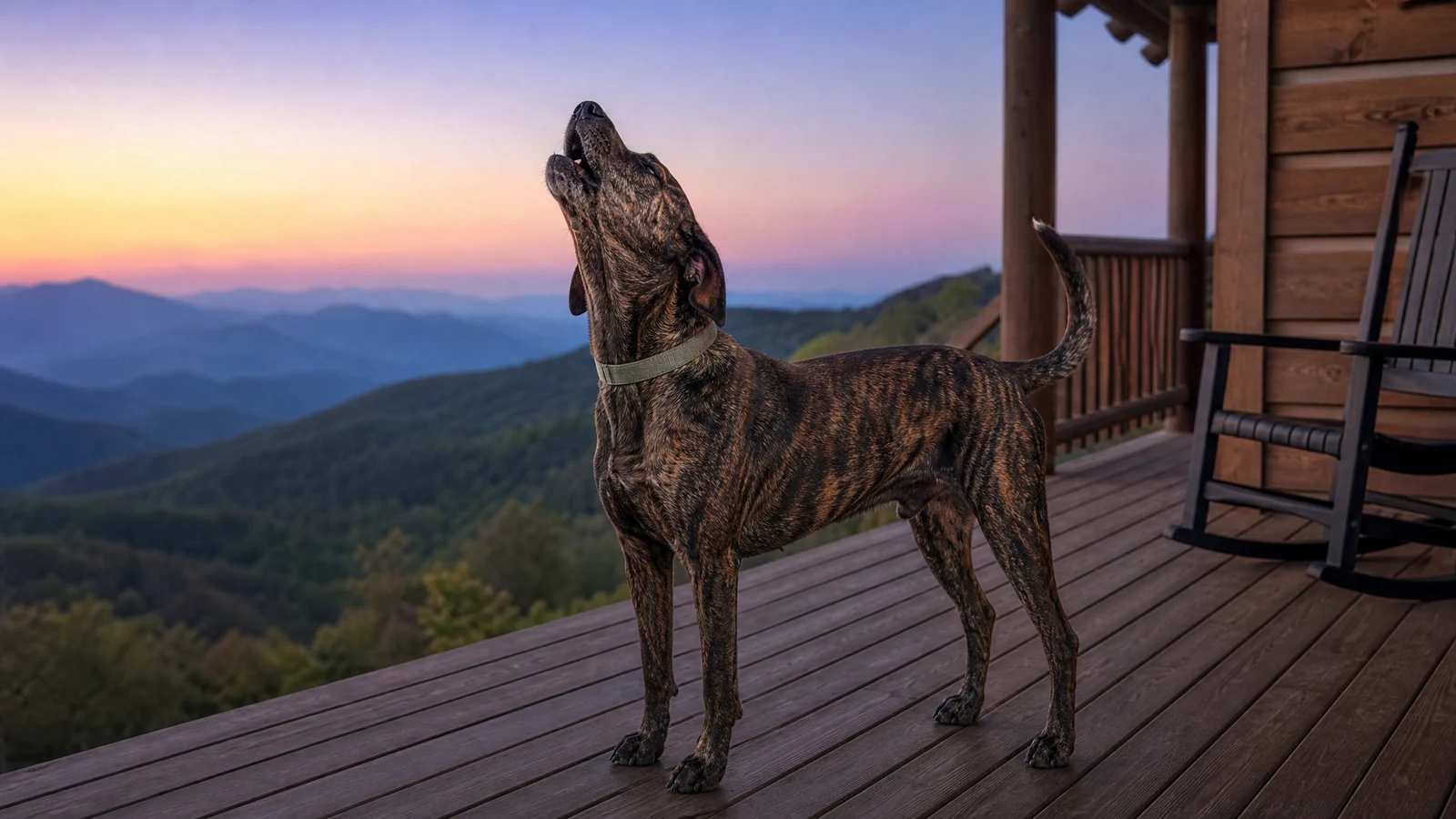 BehaviorManaging a Plott Hound's Chop and Bawl With Rewards