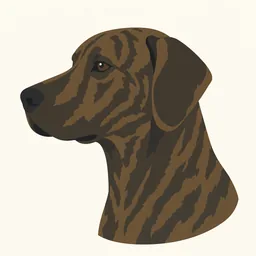
 Plott
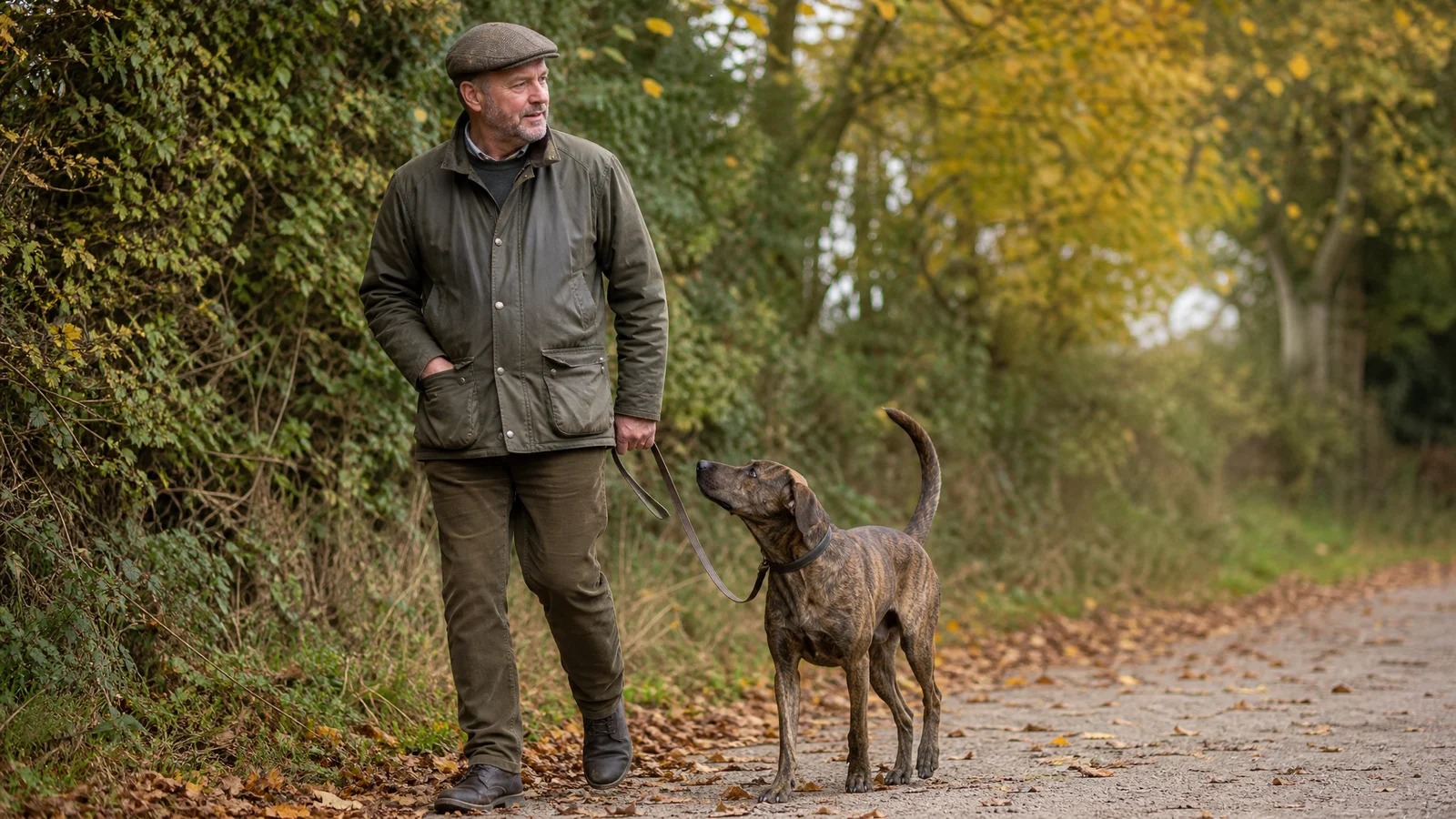
Ordinary loose-leash advice often begins by walking forward and stopping whenever the line tightens. A Plott Hound may need an earlier step. Their attention can shift toward scent before their feet accelerate, so the useful training point is the distance where they can notice an odor and still turn, eat, and move with you.
This is a scent threshold, not a test of obedience. The breed's history helps explain strong commitment to odor, but the modern lesson is safe connection, not pursuit. This guide covers threshold reading, a soft-line pattern, route planning, and rewarded sniffing. We keep the leash secure while the dog learns that slack and check-ins make exploration possible.
Plott Hound Leash Training Starts at the Scent Threshold
A threshold is the point where the environment begins to outbid the lesson. Below it, the dog can glance toward a smell and reconnect.
Near it, movement becomes quicker and responses take longer. Beyond it, the body may lean, the nose stays fixed, and food or familiar cues lose value.
Observe before asking for anything. Note the dog's head height, breathing, pace, ability to turn, and interest in food. These details are more useful than calling the dog distracted. They tell you whether to continue, add distance, or leave the area.
- Continue when the body stays loose and a voluntary glance returns easily.
- Add distance when food is taken roughly or the turn becomes delayed.
- Leave when the body fixes forward and connection disappears.
Record the First Body Change
The first change may be a closed mouth, faster nose movement, a lifted head, a sudden zigzag, or weight shifting forward. Mark the location where it begins. The goal is not to identify the exact smell. It is to recognize when the dog still has enough attention for a rewarded choice.
Wind and damp ground can change that location. Time of day and recent activity can change it too. A route that was easy yesterday may be difficult today. Treat the threshold as live information rather than a fixed distance the dog must meet on schedule.
Pause and wait for a voluntary glance, or use one familiar check-in cue. Mark the turn and reward near your leg. If the dog can eat and release back to a safe sniff, the location may be workable. If they cannot turn, create distance instead of saying the cue again.
Connection should feel easy enough to repeat. A strained response at the end of a tight leash is not the same as comfortable engagement. Move away until the dog's body softens, then reward the first return of orientation. Distance is part of training, not a failure to train.
Leash Training Builds a Soft-Line Pattern
Teach the pattern indoors or in a quiet enclosed area before testing it on a scent-rich route. Clip the leash to secure, well-fitted equipment and stand still. Mark slack, deliver food beside your chosen walking position, and release. The first goal is understanding, not distance.
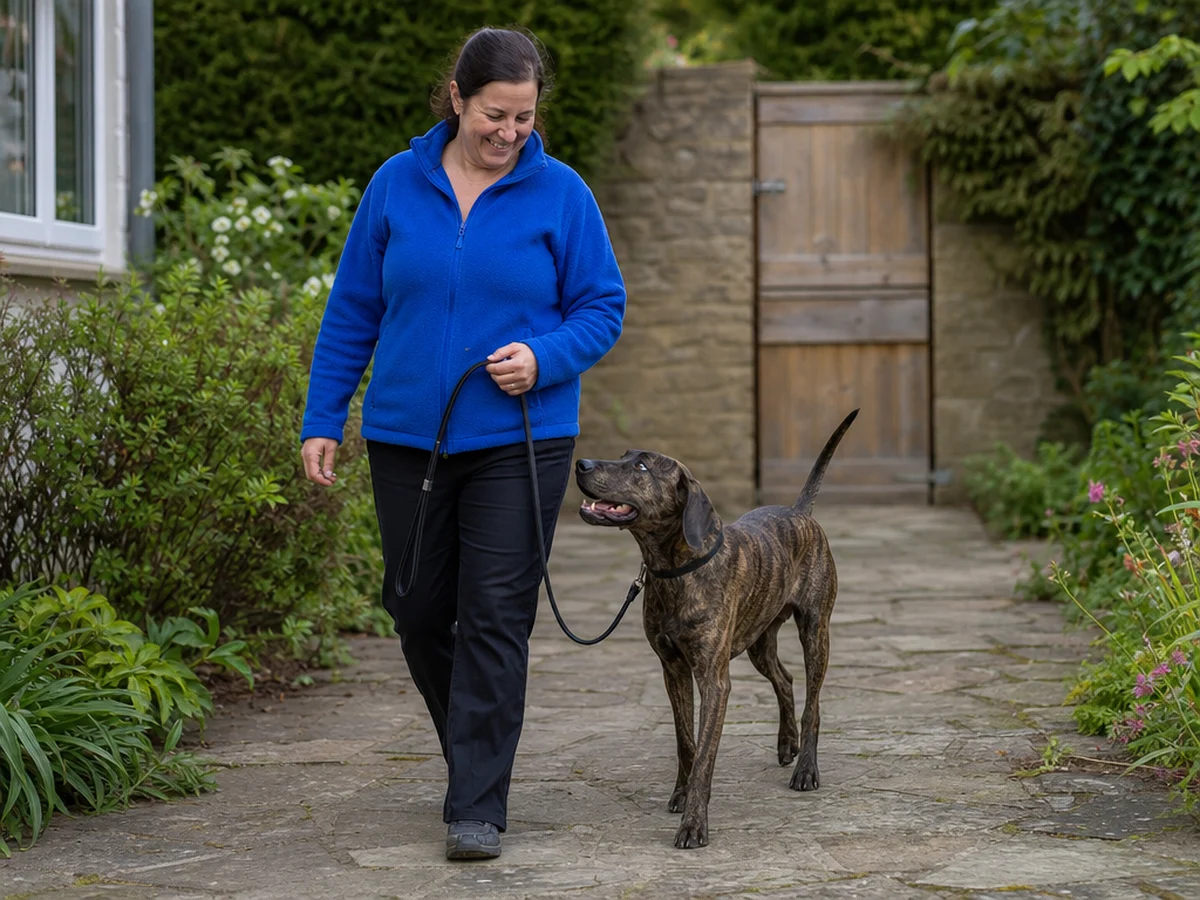
Take one step and reward the line remaining soft. Add steps gradually, changing direction before reaching the end of the leash. Battersea’s small-step method supports shaping a final behavior through successive rewarded pieces. Loose walking is exactly that kind of layered skill.
Stop Pressure Without Pulling Back
When the dog creates steady tension, stop moving. The PDSA leash guidance advises waiting rather than pulling back. Mark the moment the dog shifts, turns, or creates slack, then continue or move toward a suitable sniff.
If waiting produces more leaning, turn calmly and walk a few steps away. The Best Friends approach also changes direction, then pays the dog when they join the turn. Practice this below threshold so it becomes a familiar, well-paid exit.
Consistency matters because forward travel is powerful. If pulling reaches the smell sometimes, tension remains worth trying. Every handler should apply the same simple rule. Sustained pressure pauses access, while a soft line restores movement.
Plott Hound Leash Training Has Three Scent Scenes
The same dog may need three different responses within one block. Treat each scene by threshold level instead of insisting on one drill. The notes below are defined by observable behavior, so you can choose an action without guessing what the dog intends.
Low Scent Pressure
The dog moves comfortably, takes food, and offers check-ins while sniffing. Use this scene for several soft-line repetitions. Reward near your leg, vary pace gently, and release to investigate an appropriate spot. Sniffing is part of the payment, not something withheld until the walk is over.
Keep the ratio generous. A few connected steps can earn a longer sniff. As the pattern becomes familiar, food can become intermittent while access to safe exploration remains dependable. Do not remove every reward at once merely because one route looks easy.
Middle Scent Pressure
The nose works faster, available slack disappears more often, and check-ins become slower but still possible. Shorten the working stretch. Increase reward value, move farther from the scent source, and use a practiced turn before tension becomes sustained.
Ask for less precision. One glance and two soft steps may be enough before you release or leave. The Plott training principle deck explains why changing only one variable makes the next result easier to interpret.
Middle pressure is useful only while the dog can recover between repetitions. If each response is slower than the last, the scene is climbing toward the next category. End the exercise before connection disappears.
Over the Scent Threshold
The dog cannot turn comfortably, will not take an ordinarily valuable reward, or repeatedly hits the end of the leash. Stop teaching in place. Use distance, a visual barrier, or a quiet turn to leave. Keep both hands organized and avoid wrapping the leash around a hand or body part.
Move steadily toward a lower-pressure location while the dog is unable to process a precise request. The pulling guidance supports changing direction and paying the dog when they come with the person. Your job at this point is safe movement, followed by recovery.
Leash Training Needs a Workable Route
Route design can make good timing possible. Begin at a quiet hour with wide sight lines and several places to turn away. Avoid narrow passages where you cannot add distance. A shorter route with successful choices is better training than a longer route built around repeated pulling.
Divide the walk into zones. The departure zone is for calm equipment checks and a soft start. The practice zone has manageable smells and room to turn. The sniff zone allows appropriate exploration on release. The recovery zone is a quiet stretch home where criteria drop.
Check Equipment Before the Door Opens
Use secure equipment that fits without rubbing or restricting natural movement. Inspect clips, straps, and leash condition before every outing. A harness is not a training method by itself. Comfortable, stable equipment supports practice and helps the handler manage direction without pressure on the neck.
Practice the doorway with the exterior door closed. Reward slack and a brief check-in, open the door slightly, and reset if the dog surges. The real walk begins only when both parties can leave safely. Rushing through the threshold often spends the dog's available attention before the route starts.
Carry small rewards where they are easy to reach, but keep your hands free of tangled leash. Plan the first turn and the first sniff release before stepping out. Preparation prevents the person from searching for food while the dog discovers that pulling is the fastest route to the sidewalk.
Leash Training Recovery After a Strong Scent
Recovery begins when the dog can soften their body and take food normally. They should also be able to sniff without surging and respond to an easy cue. Do not rush back toward the difficult location as soon as one treat is accepted. Give the nervous system time to shift and finish the outing on a simpler route.
Write the Post-Walk Note
Record the setting, first body change, action you took, and recovery. “Fast zigzag at the corner, crossed early, ate after half a block” is useful. “Bad walk” is not. A concrete note shows where the next route should become easier.
Compare the recovery zone across several walks. If the dog returns to comfortable movement sooner, the plan may be working even before the hardest corner is manageable. If recovery keeps taking longer, reduce exposure and consult a qualified reward-based professional for direct observation.
Sudden pulling, reluctance to wear equipment, an altered gait, or sensitivity to touch may have a physical cause. Keep regular veterinary visits in the routine and ask a veterinarian about abrupt changes. More repetitions should not be used to push through discomfort.
At home, provide water and quiet. A brief mat settle can help the transition if the dog already knows it, but do not turn recovery into another demanding session. The Plott Hound temperament notebook keeps that cue voluntary and low key.
Expect a Lifelong Plott Hound Safety Habit
Loose-leash skill can improve greatly, but the leash remains a safety system. The Plott's scent-driven history and determined movement make secure attachment a sensible lifelong choice in open areas. Reliable responses do not erase instinct, changing conditions, or the possibility of a novel odor.
Expect maintenance when seasons, routes, adolescence, health, or household schedules change. Return to wider distances and better rewards when a familiar walk becomes difficult. The Plott Hound recall decision tree applies the same risk principle to longer practice lines.
Long-term success is not a perfect heel past every smell. A successful dog can investigate safely, reconnect at workable distances, travel on a mostly soft line, and recover after a hard moment. A successful handler notices the first body change and chooses space before conflict.
We also expect skills to vary with weather, route novelty, and recent activity. That variation does not make the training unreliable. It gives the handler a reason to reassess the threshold before deciding how many connected steps are fair on that outing.
On the next walk, record only one threshold. Find the place where the nose quickens but connection remains available, reward the turn, and release to a suitable sniff. That single observation gives the next route a clearer starting point than any tug of war could.
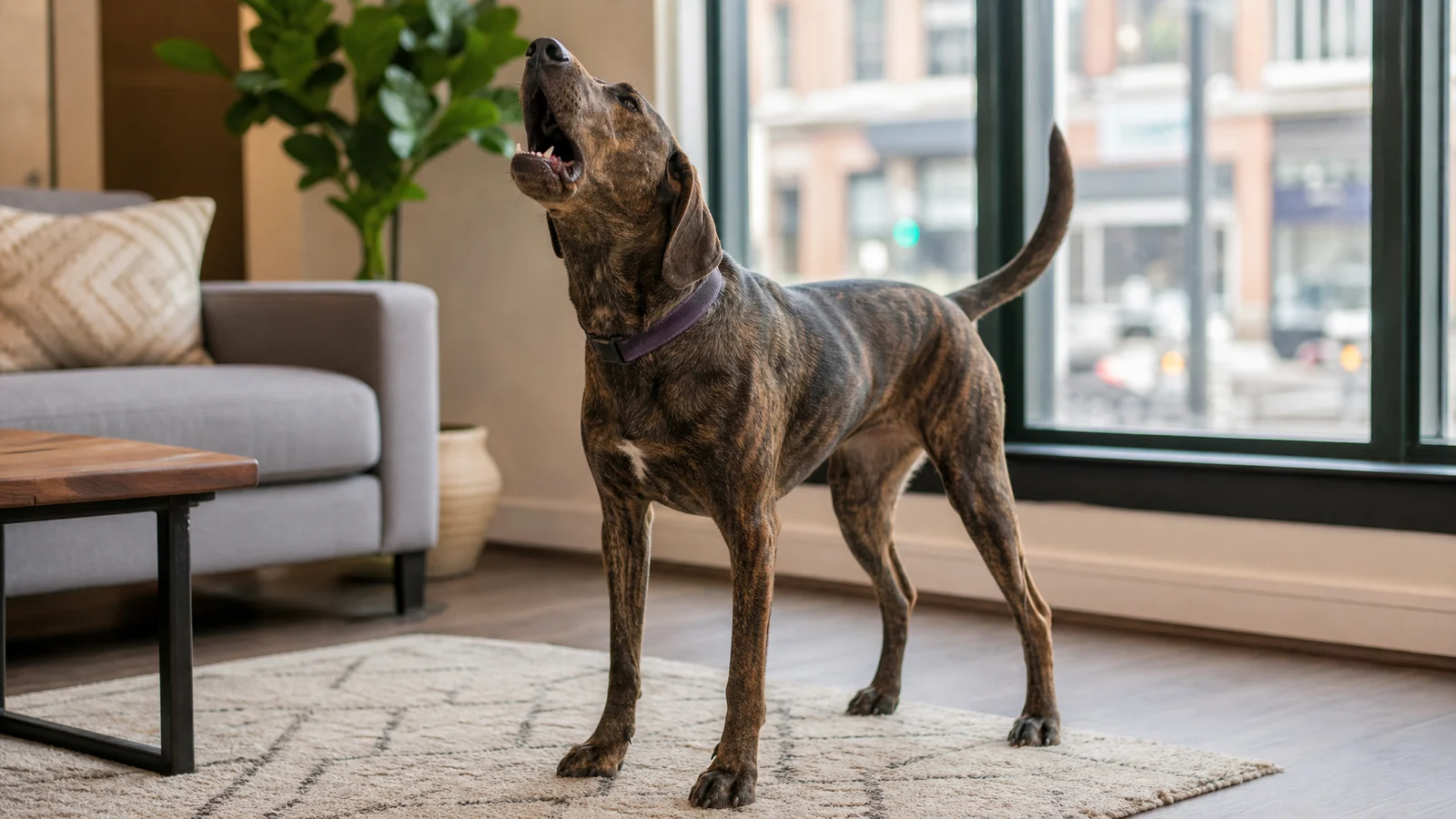 BehaviorPlott Hound Barking and Baying: Can They Live in an Apartment?
 BehaviorWhat Does It Mean When Your Plott Hound Buries or Hides Treats?
 BehaviorWhy Does My Plott Hound's Hair Stand Up on Their Back?