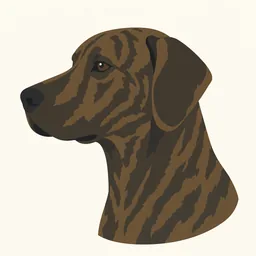
 Plott
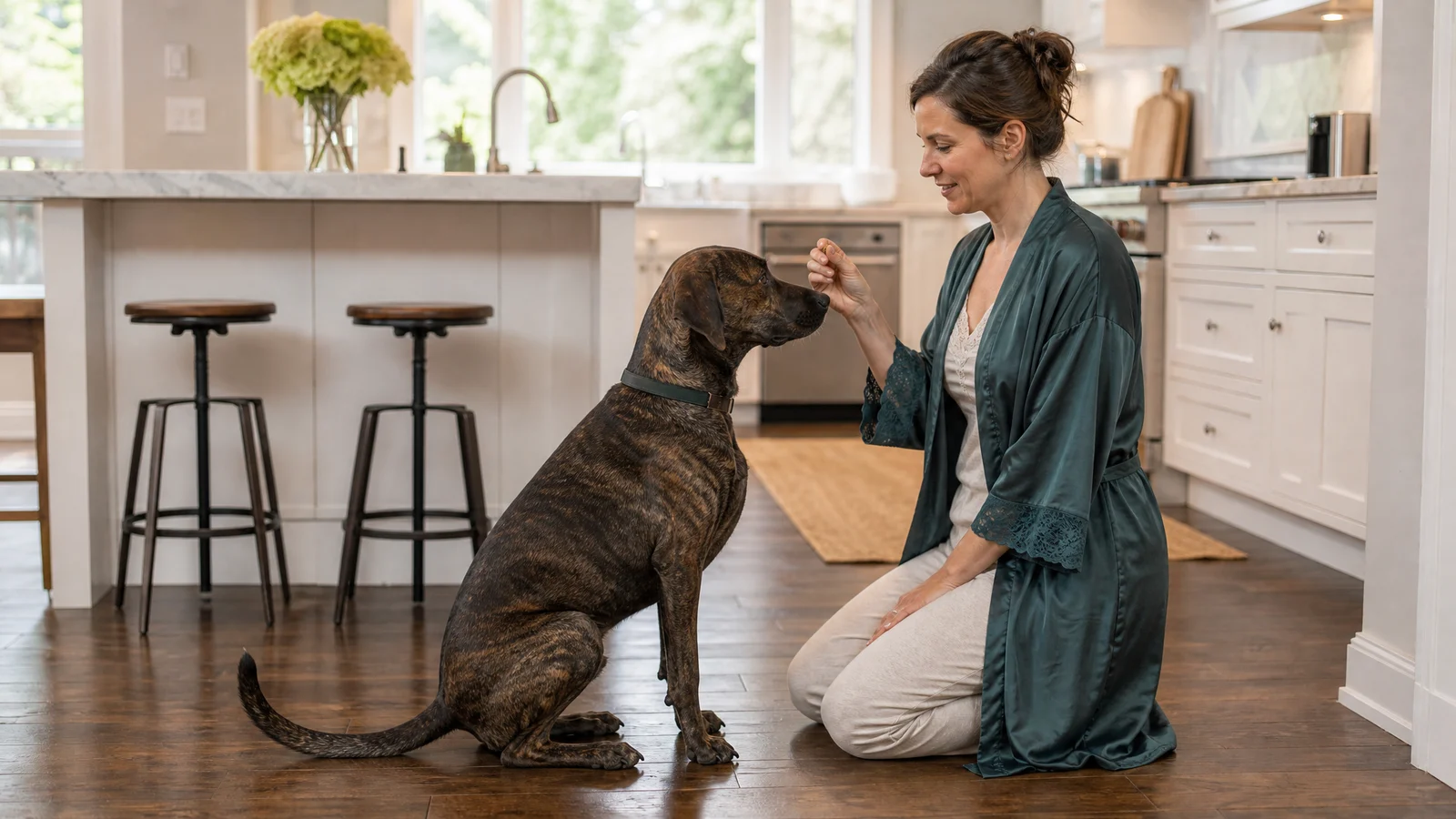
The common first-month mistake is treating training like a long checklist. A smart Plott Hound may learn several motions quickly, but quick responses do not mean the skills are ready for a doorway, sidewalk, visitor, or compelling smell. A crowded plan hides which part they actually understand.
Use the month as a calendar of small, repeatable lessons instead. The Plott is described as intelligent, alert, loyal, and eager to please, so clear work can suit them well. This guide covers setup, daily timing, four weekly cards, and the evidence that should shape the next two weeks. Progress matters more than finishing on a date, and we favor clarity over speed.
Set the Plott Hound Training Calendar
Start with three outcomes that improve the household now. A name response creates connection, a release word makes boundaries understandable, and a mat gives calm behavior a location. These foundations support later leash and recall work without asking the dog to memorize a collection of unrelated commands.
The official breed standard connects the Plott with stamina and an alert, intelligent temperament. That history helps explain sustained focus on something interesting.
It does not require nonstop drilling. In a home, the useful translation is brief work followed by a real break.
Choose a marker before the first lesson. A click or a short word can identify the exact action that earned food, praise, play, or access to a safe sniff. Agree on one marker and one release word across the household. Consistency makes the calendar easier to read from the dog's side.
Reward-based structure is not permissiveness. The humane training statement supports teaching desired behavior without fear, intimidation, or pain. Doors can stay closed, walks can pause, and access can wait while the dog learns which safe action opens the opportunity.
Write a simple baseline for each priority. Record where the behavior happens, what distraction is present, and what the dog can do comfortably. “Looks toward me in the kitchen” is usable. “Knows their name” is too broad because it does not identify the conditions under which the response succeeds.
Build a Daily Training Calendar
Short and regular is the operating rule. The RSPCA training guidance recommends brief sessions so a dog is not overwhelmed. Two focused minutes before breakfast can teach more than a long evening block in which timing, attention, and reward quality all fade.
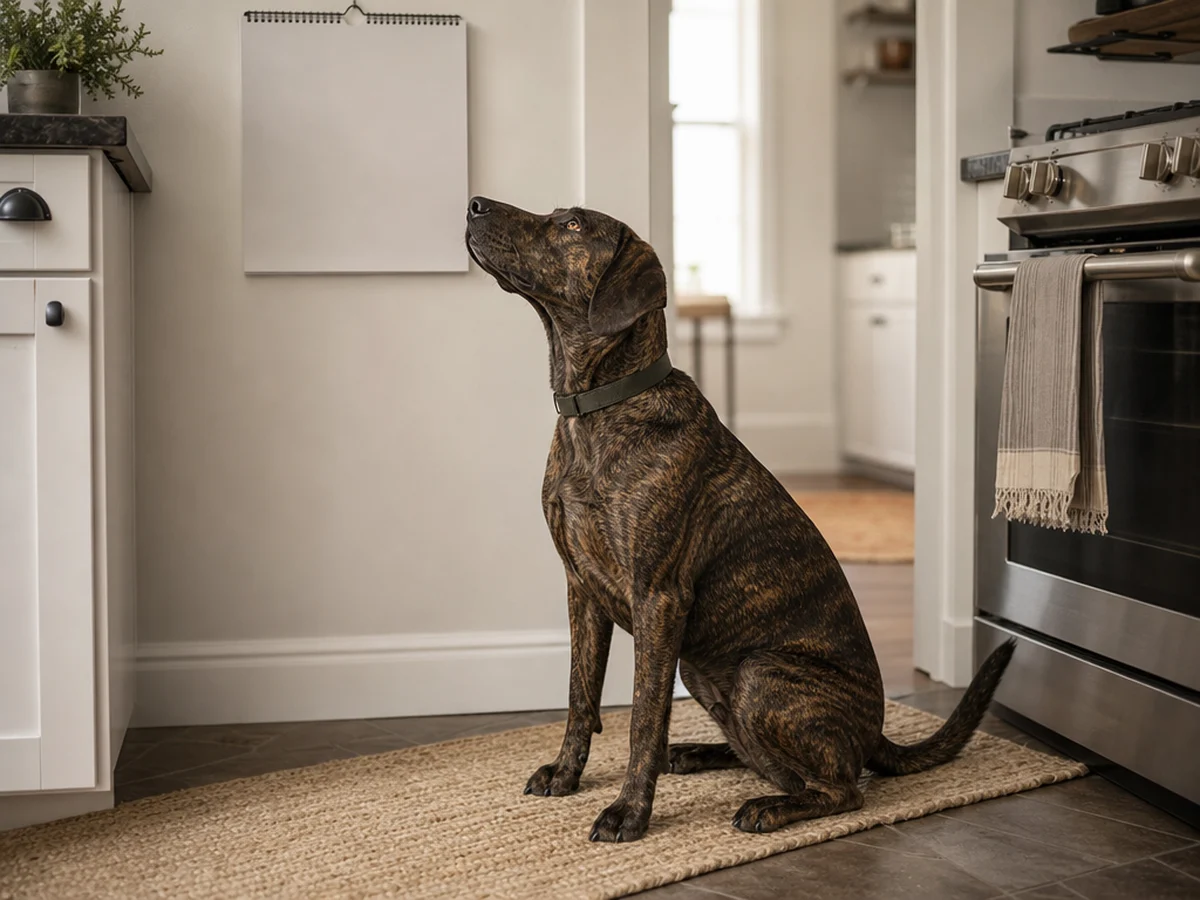
Attach each lesson to an event that already occurs. Practice the name response before setting down a meal, the doorway pause before a walk, and the mat while a person prepares food. An existing event becomes the reminder, which makes repetition more dependable than relying on spare time.
| Daily moment | Training job | Useful finish |
|---|---|---|
| Breakfast setup | Marker and name response | Release to the meal |
| Leash clipping | Stillness and check-in | Release toward the door |
| Afternoon reset | Mat orientation | Quiet chew or rest |
| Evening room change | Follow and hand target | Permission to sniff |
The reward should fit the moment. Food is precise for a new action, while movement, a toy, praise, or permission to investigate can maintain a familiar one. A dog who turns away from ordinary food is giving information about difficulty, fullness, or competing interest. Improve the setup before assuming stubbornness.
Leave open space on the calendar. A Plott Hound also needs appropriate exercise, scent-rich exploration, and recovery. Training cannot replace those needs, and exhausting a dog is not a shortcut to calm. On a difficult day, management and rest may be the best entry rather than another formal lesson.
Four Plott Hound Training Week Cards
Each card has a foundation, a daily-life test, and a stop rule. Move within the card at the dog's pace. A week is an organizing box, not a promise that learning will be complete by Sunday. Carry an unfinished foundation forward without stacking a harder version on top.
Week One Makes Rewards and Releases Predictable
Pair the marker with a reward in a quiet room, then capture easy actions such as a head turn or a step onto a defined resting surface. Mark at the instant the action happens and deliver promptly. The dog should begin orienting toward the reward source when they hear the marker.
Add a release word after a brief pause. Say it once, then toss a treat a short distance or invite movement. The release tells the dog when a repetition ends, which prevents food delivery from becoming an accidental ending. Use it at meals, doors, and the mat.
Keep the name positive. Say it once when the dog can respond, mark the turn, and reward near you. Do not use the name as a reprimand or repeat it while they remain absorbed elsewhere. If the turn is slow, reduce distance and competing activity.
The stop rule is loss of clarity. Wandering, frantic grabbing, repeated scratching, or failure on an action that was easy a moment ago can mean the session ran too long. Release the dog, provide water or an appropriate break, and make the next practice shorter.
Week Two Puts Calm Behavior on a Location
Place a nonslip mat in a quiet area and reward any voluntary approach. Begin with looking, then one paw, then more of the body. Avoid pulling or physically positioning the dog. Discovery makes the mat valuable and gives the dog an active route into calm.
Once all four paws arrive easily, deliver several rewards low and between the paws. Pause before each one so stillness becomes part of the pattern. Release before the dog leaves on their own. The detailed Plott Hound temperament notebook develops this single behavior further.
Test the mat during one mild household activity, perhaps a person sitting down or opening a cabinet. If the dog can no longer orient to the mat, the scene is too difficult. Reduce movement, restore distance, or return to the quiet room before trying again.
Week Three Connects Training to Movement
Practice a hand target and a few steps of following indoors. Present an open palm near the dog's nose, mark a voluntary touch, and reward. Move the hand slightly to one side on the next repetition. The target can later guide a turn without pushing the dog or tightening a leash.
Clip the leash on indoors and reward slack before walking. Take one or two steps, mark when the line remains soft, then release to a safe sniff. The complete Plott leash training field notes show how to carry this pattern past smells without creating a tug of war.
Doorways are the daily-life test. Reward a pause while the door is closed, then repeat with a small opening. Close it calmly if the dog surges and make the next version easier. The goal is a predictable path through the door, not a contest over restraint.
Week Four Rehearses Return and Recovery
Begin recall practice only where the dog is secure. Move a few steps away, use the cue once, and reward generously when they reach you. Touch the collar or harness gently before releasing again, so arrival does not predict being grabbed or the immediate end of every enjoyable activity.
Use a long line only in a clear, suitable area with secure equipment and careful handling. The site’s Plott Hound recall decision tree explains how risk changes across locations. A line adds practice space, but it does not turn an open area into a fence.
Recovery belongs on this card because arousal can linger after movement and scent. Return to the mat, offer water, and lower household activity. Reward relaxed choices without demanding a rigid posture. A dog who can shift from engagement to rest is learning a useful rhythm, not merely another cue.
Read the Month's Training Record
Review conditions, not labels. Note the room, reward, distance, distraction, and response. A faster turn toward the marker, an easier release, or a voluntary visit to the mat can show understanding before a behavior looks polished. Specific observations make tomorrow's decision smaller.
- Keep the setting when the response remains comfortable and accurate.
- Lower one criterion when speed or confidence drops across two opportunities.
- Pause the plan when an abrupt physical or behavioral change appears.
Missed responses are useful if you change one variable. Improve the reward, reduce the distraction, shorten the duration, or move closer. Do not repeat the cue until the dog eventually complies. Repetition without adjustment teaches that the first few words have no consequence.
Compare several similar opportunities. One excellent response after a quiet morning does not prove the skill works beside traffic, and a sluggish turn on a busy day does not cancel earlier learning. Patterns across comparable settings are the strongest evidence in the record.
Watch the dog's body while you review. Comfortable movement, willingness to reengage, and ordinary recovery support the current level. Avoidance, persistent tension, or sudden behavior change deserves a pause. Keep regular veterinary care in place and ask a veterinarian about abrupt changes before increasing training demands.
Household consistency deserves its own line. Record which cue and release each person used and where rewards appeared. If the behavior works with one person only, compare timing and setup before deciding the dog is choosing favorites. The plan should be teachable to every handler.
Carry Plott Hound Training Forward
The first month should leave a small group of usable patterns, not a finished dog. Keep the marker, release, name response, mat, hand target, soft leash start, and secure recall game. Drop any exercise that has no clear daily purpose rather than preserving it only because it appeared on the calendar.
During the next week, move one strong skill to one nearby setting. Try the mat in an adjacent room or the name response near the closed front door. Keep reward quality high and the criterion familiar. New surroundings are already an increase in difficulty, so duration and distraction can wait.
In the following week, add one modest challenge while protecting recovery. That might be a longer calm pause, an extra connected leash step, or recall from a safe sniff on the line. When fluency drops, return to the last comfortable version and close on a clear response.
Today, choose the three household outcomes and attach each one to a daily event. That small calendar gives a focused Plott Hound clear information, frequent rewards, and enough open space to recover. The next month can grow from evidence instead of from a longer wish list.
 Training basicsTraining a Plott Hound to Walk on a Loose Leash Past Smells
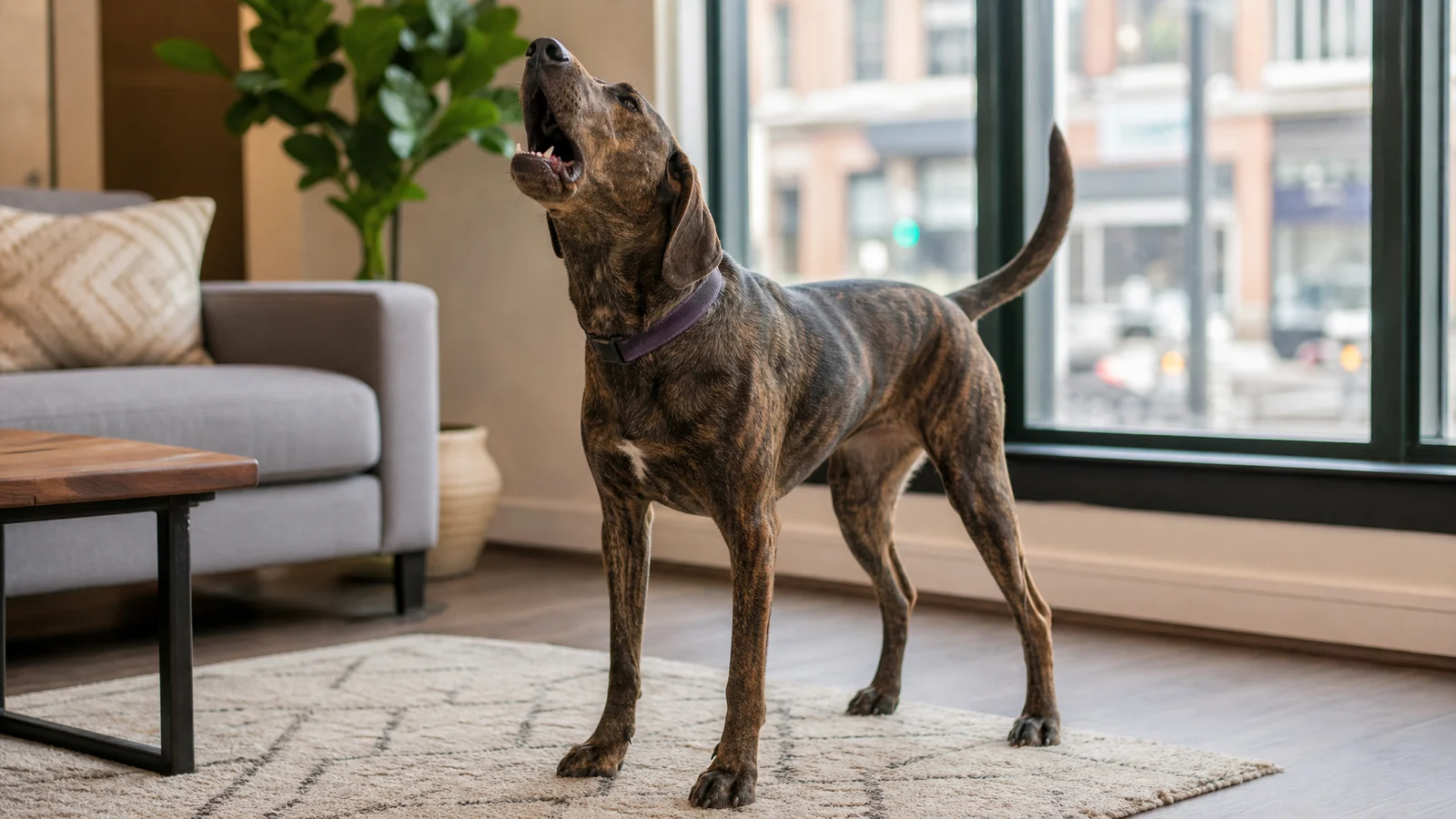 BehaviorPlott Hound Barking and Baying: Can They Live in an Apartment?
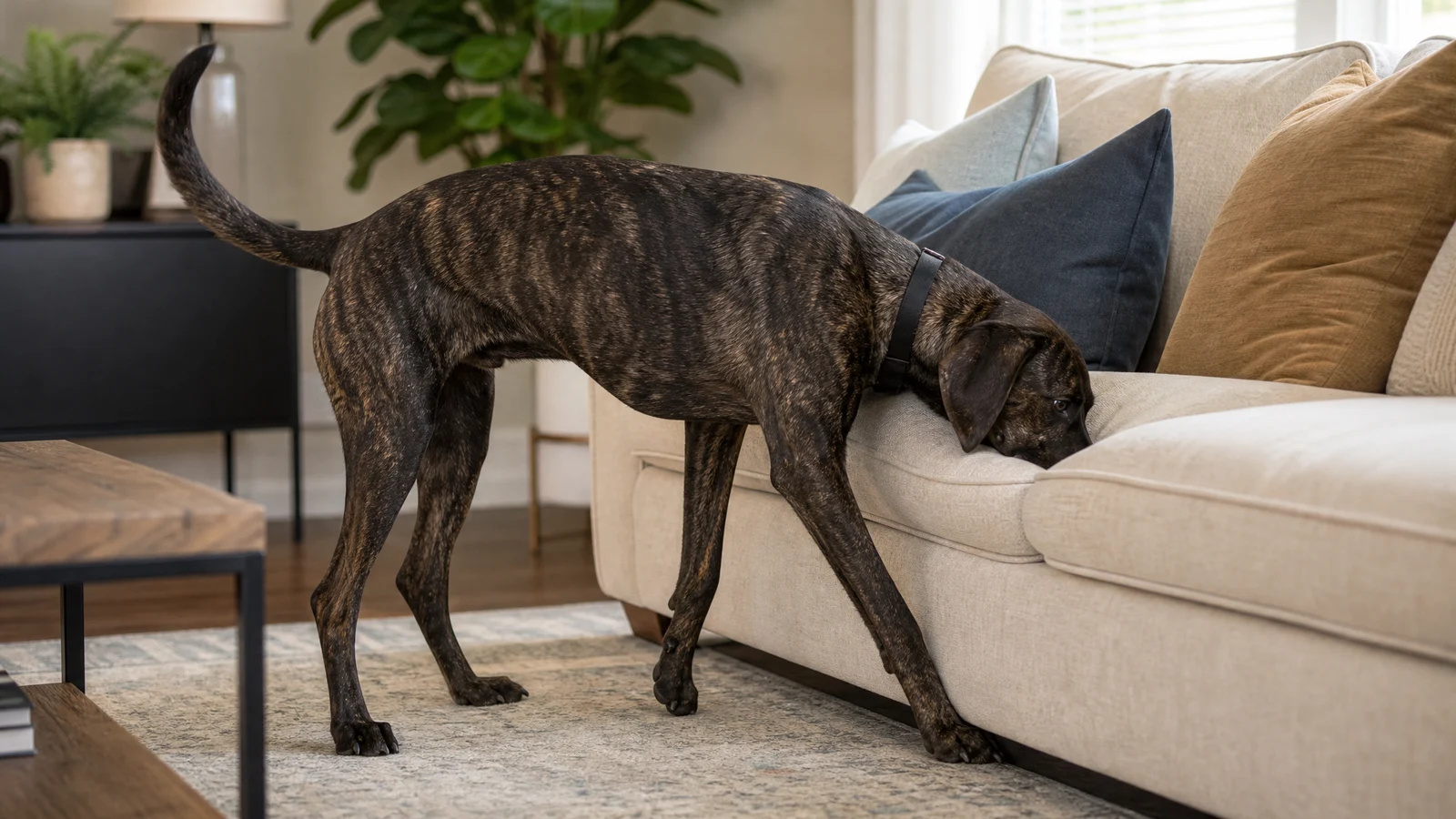 BehaviorWhat Does It Mean When Your Plott Hound Buries or Hides Treats?