 Plott
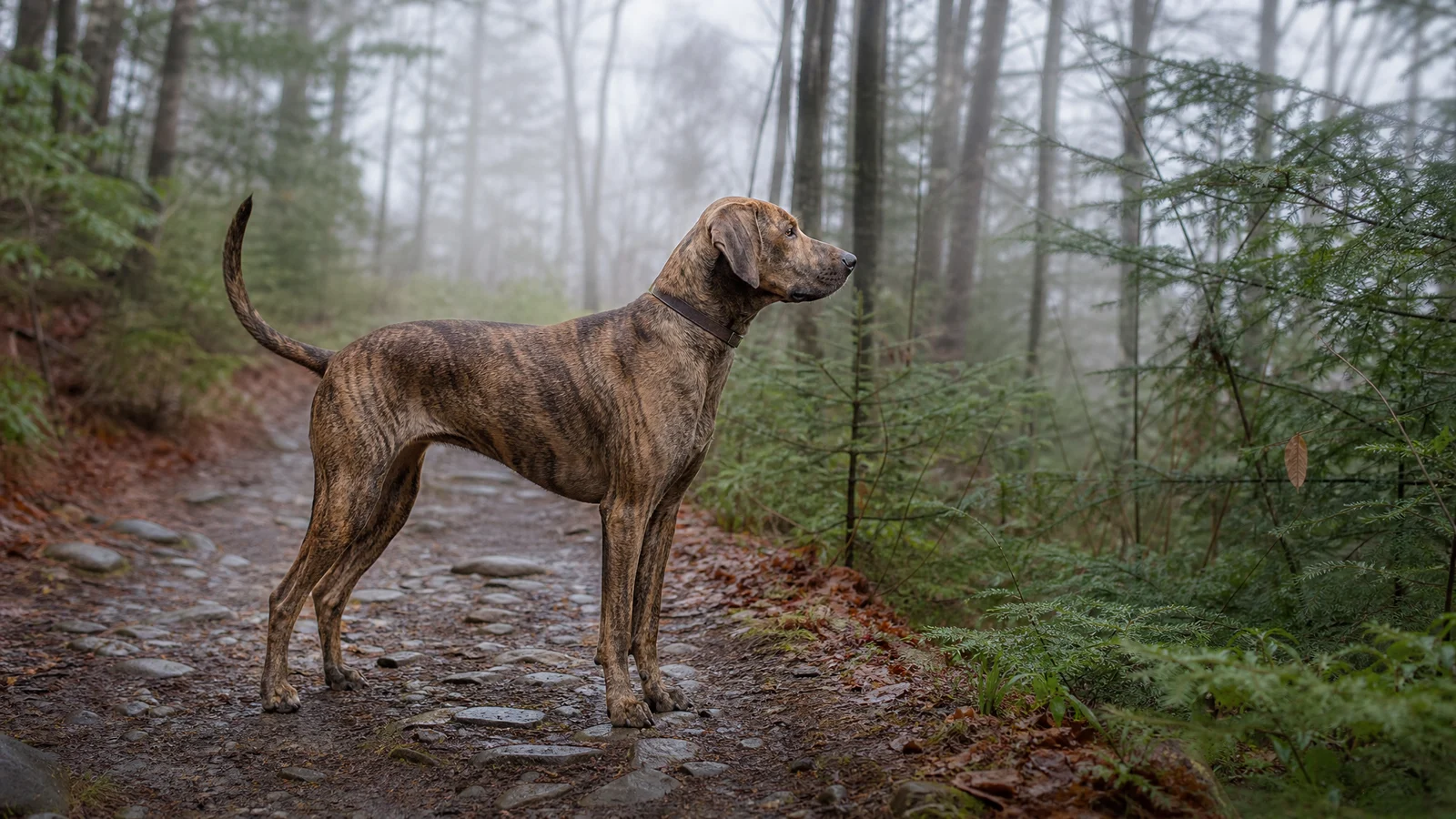
The easiest moment to help a Plott Hound pass wildlife happens before the leash goes tight. A head turn, closed mouth or weight shift toward a squirrel can become a hard stare within seconds. Training aims at that early orientation, where the dog can still eat, move and choose to look away.
This is not a plan for getting close to deer, cats or other animals. In this guide, we will map the encounter arc, set distance with food and movement tests, reward disengagement and leave through a rehearsed pattern before pursuit takes over. Secure equipment remains the backup, while the final progress check compares distance, response and recovery across similar routes.
Locking Onto Wildlife Follows an Encounter Arc
A wildlife encounter has stages. The Plott may notice scent or motion, orient, stare, lean, surge and attempt pursuit. Individual sequences vary, but the handler needs to identify the last point where the dog can respond without being physically pulled away.
We call that point the working edge. It may be a quick ear turn on one route and a full-body pause on another. Marking the edge on a simple route map helps the handler leave before the more obvious lunge begins.
| Stage | Observable sign | Handler decision |
|---|---|---|
| Notice | Ears or nose turn while body stays mobile | Mark orientation and prepare distance |
| Fix | Closed mouth, still body, hard visual line | Use practiced exit immediately |
| Load | Weight forward, lowered body, leash tightening | Increase distance without testing a cue |
| Pursue | Lunge, run or vocal chase attempt | Rely on equipment and leave the area |
Film staged practice only if another person can do so without reducing safety. Otherwise, write the first two visible changes after the encounter. The goal is not a dramatic record. It is recognizing the earliest moment that predicts loss of response.
Prey behavior is not the same as anger or disobedience. A dog may be silent, focused and highly motivated. Scolding the stare does not create a safe alternative, and it may make the handler another source of conflict in an already intense moment.
The site's Plott raised-hackle guide helps interpret arousal without relying on one signal. This article concerns the visual wildlife sequence and the exit before pursuit. Do not assume success beside an odor guarantees success when an animal moves.
Safe Distance Before a Plott Hound Locks Onto Wildlife
Use a well-fitted harness or secure collar system appropriate for the individual dog, a fixed leash and rewards prepared before the walk. Inspect clips and stitching regularly. Long lines belong only in open areas away from roads, people and obstacles where the line could tangle.
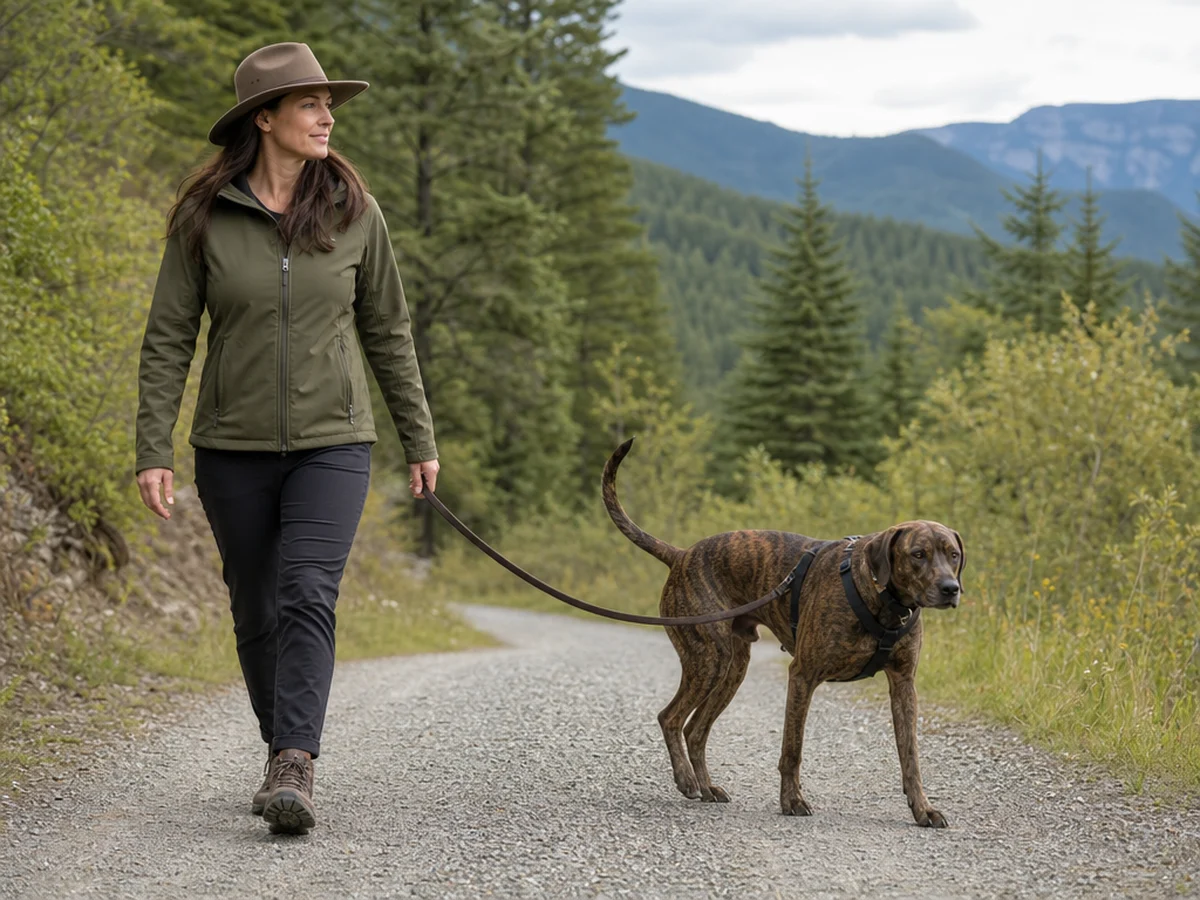
Distance is workable when the dog can glance at the animal, take food without snatching and move with the handler. If any of those abilities disappear, create more space. Do not wait for all three to fail before leaving.
Begin with predictable wildlife at a great distance, such as birds across an open field. Avoid nesting areas, livestock boundaries and places where training would disturb animals. Safety and wildlife welfare matter more than completing a repetition.
Build escape space into route choices. Cross a street early, turn behind a visual barrier or use a wide field edge rather than a narrow path. A route without exits asks equipment to solve a problem that planning could have prevented.
The AVSAB training statement supports reward-based methods while recognizing structure and guidelines. Distance, secure equipment and route limits are part of that structure. They allow the dog to practice a safe choice without fear or pain.
Orientation Before Locking Onto Wildlife
Install an orientation cue in a quiet room. Say the dog's name once, mark the first head turn and reward beside your leg. Then practice while walking, with food delivered in the direction you want the team to travel.
Add ordinary distractions before wildlife. Use a person standing at a distance, a rolling object or food placed under a container. The dog notices, hears the cue and turns back, then both move away together. Keep repetitions sparse so the name remains meaningful.
Teach a separate emergency movement cue such as “this way.” Say it, turn through a broad arc and feed several small rewards as the dog follows. Practice in both directions and on different surfaces before relying on it outdoors.
Do not use the cue to repeatedly pull the dog from something irresistible. If the first response fails, create distance with your practiced movement and management. Repeating the word while the stare deepens weakens the cue and delays the exit.
Reward voluntary check-ins on every walk. A glance that the handler did not request shows the dog still has attention available. Paying those moments creates a history of choosing the team before wildlife enters the picture.
- Mark the first ear or head turn toward you.
- Deliver food in the direction of the safest exit.
- Move away before asking for another response.
- Release to ordinary sniffing once the body softens.
A Plott Hound Look-Away From Wildlife
At a generous distance, let the dog notice the animal. Mark the first look, then place food near your leg or slightly behind you. Reward placement turns the body away and creates room for a second decision rather than holding the dog face-to-face with the trigger.
After eating, the dog may look back. That is not failure. Another calm glance can be marked and paid if the body remains mobile. The lesson is a rhythm of notice, disengage and move, not a demand to pretend wildlife is absent.
If the dog locks on before the mark, use the exit pattern and increase distance. Do not wave food against the nose or move closer to prove the dog can cope. A missed repetition tells you the setup crossed the workable threshold.
Food is useful because it is fast, but movement and access can also reinforce. After a successful look-away, trot several steps in the opposite direction or release the dog to sniff a safe patch. The new activity should carry attention away from the animal.
Keep the leash as soft as safety permits. The PDSA leash guide recommends stopping rather than pulling back when tension starts. Around wildlife, distance comes first, so turn away on an arc and reward following instead of entering a pulling contest.
Exit Patterns When a Plott Hound Locks Onto Wildlife
One exit will not fit every route. Practice three patterns without wildlife until the dog's feet recognize them. Each pattern begins before the leash is fully tight and ends in a place where the dog can sniff, eat or recover.
Wide U-Turn When a Plott Hound Locks Onto Wildlife
Use a cheerful movement cue and turn in a broad half circle. Feed beside your leg for several steps, then continue away. A wide arc is easier for a moving dog than a sharp pivot and reduces the chance of leash tangling.
Find-It Exit When a Plott Hound Locks Onto Wildlife
Scatter several treats behind your direction of travel, away from the animal. Sniffing lowers the head and buys time while you orient to a safe route. Use this only where the ground is clean and the dog can still search rather than stare.
Visual-Barrier Exit When a Plott Hound Locks Onto Wildlife
Move behind a parked vehicle, hedge or building corner while maintaining safe distance from traffic. Once the animal is out of view, reward the dog for reconnecting. The barrier changes the picture instead of demanding self-control in continuous exposure.
The Best Friends leash guide recommends turning and rewarding the dog as it comes with the handler rather than yanking. Practice that movement when the environment is easy. During a surprise, the trained pattern can carry both bodies out before conflict grows.
Wildlife Types Change the Practice Setup
The same distance does not fit every animal or location. Speed, direction, barriers and the Plott's history all change the working edge. Start each category farther away than the last successful setup, then let observable response set the next decision.
Squirrels and Small Animals
Small, fast movement can trigger a rapid surge. Work far from trees or feeding areas where appearance is predictable, and leave after one or two useful disengagements. Do not use neighborhood cats as training equipment or allow the dog to approach them.
Deer and Large Wildlife
Deer can appear at dawn, dusk or trail edges with little warning. Choose open sightlines, keep the dog secured and turn away early. Never approach for a better rehearsal, since both the wildlife and dog can behave unpredictably at closer range.
Dogs, Livestock and Ambiguous Shapes
Do not assume every stare has the same function. Another dog may involve social tension, while livestock require strict legal and physical separation. Increase distance and seek qualified help if fixation includes aggression, redirection or an inability to recover.
Track three measures: the distance where the dog can still eat, the time needed to look away and the quality of recovery afterward. Progress means those measures improve gradually across comparable setups. It does not mean standing closer on every walk.
Unexpected encounters will happen. Keep both hands available, avoid wrapping the leash around a wrist and move toward the clearest exit. If the dog lunges, do not punish after the animal is gone. Recover first, then choose an easier route for the next outing.
Regular veterinary care supports safe walking, especially if sudden fixation travels with discomfort, sensory change or altered movement. When the dog redirects, cannot recover or creates a serious safety risk, arrange an in-person assessment with a credentialed behavior consultant committed to humane methods. The consultant should watch the entire encounter sequence before changing distance.
Progress When a Plott Hound Locks Onto Wildlife
Track the distance where food remains possible, the time required to disengage and the quality of recovery after leaving. Compare similar routes instead of mixing a quiet field with a narrow trail. We want stable improvements, not one close pass that cannot be repeated safely.
Review the site's Plott voice training separately if wildlife encounters also produce prolonged baying at home or from the yard. The functions may overlap, but this walk plan still ends with distance and movement rather than a household quiet routine.
End the next practice after one clear success. Let the Plott notice at a safe distance, mark the look-away and leave through the easiest rehearsed exit. The strongest result is not closeness to wildlife. The result is a dog who can return to the team before the stare becomes pursuit.
 BehaviorHow to Keep a Plott Hound From Climbing and Escaping the Yard
 Puppy trainingRedirecting a Black Plott Hound Puppy From Mouthing to Chews
 Training basicsA First Month Training Plan for a Smart, Focused Plott Hound