 Plott
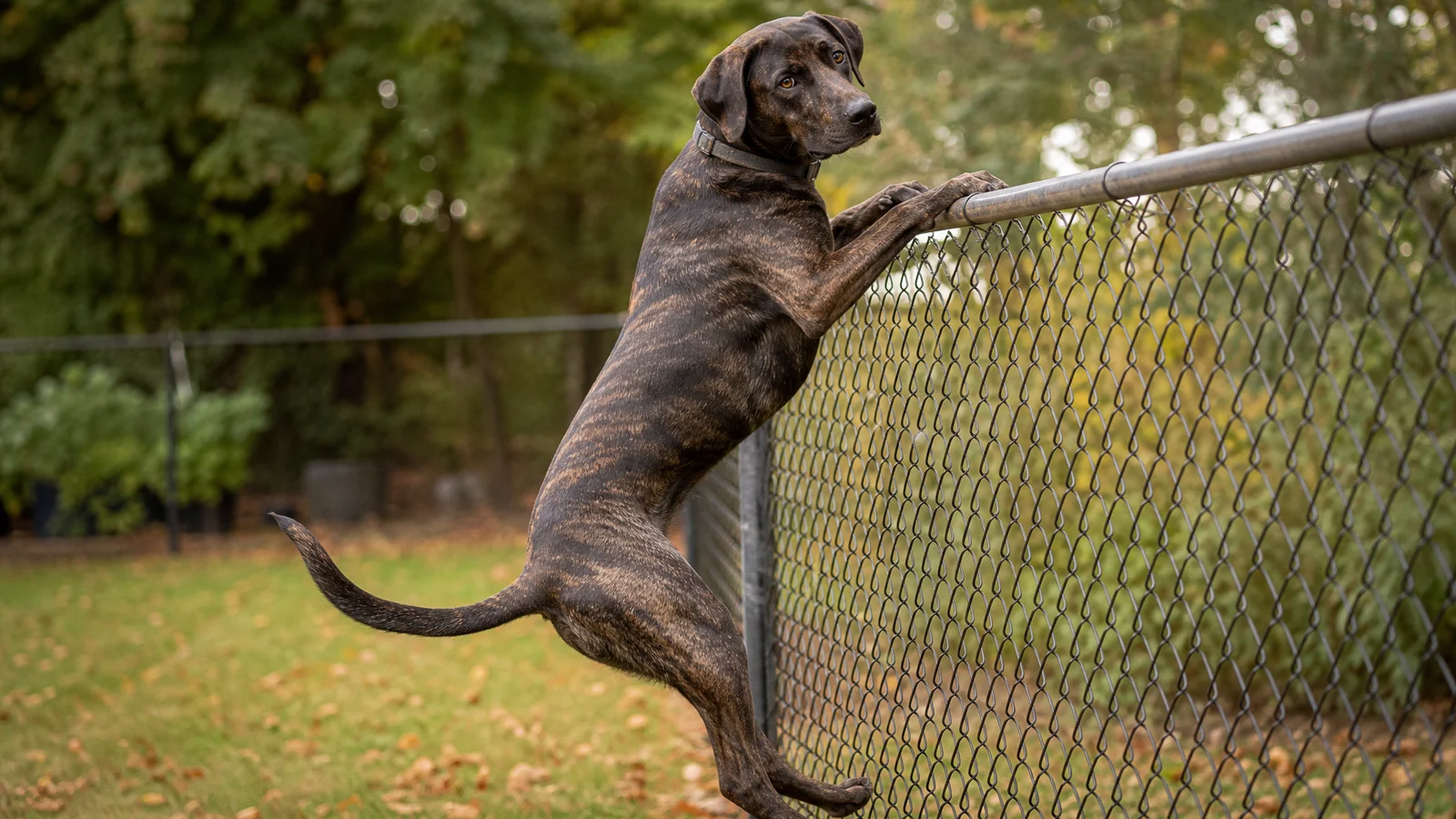
A Plott Hound who escapes has found a complete system: a route out, a reason to use it and a payoff on the other side. Calling the dog determined does not identify whether the breach was a loose gate, climbable corner, dug gap or human mistake. The physical route must close first.
In this guide, we will secure the dog, write a breach report, inspect gates, fence lines and ground edges, then build supervised perimeter skills. Containment work comes before any recall test.
Yard freedom returns by physical zones only after the hardware and behavior both hold. Recall remains valuable, but it is not a substitute for containment. Each escape becomes a breach investigation followed by verified repairs and supervised laps.
Stop a Plott Hound Climbing and Escaping Before Training
After any escape, move outdoor time to a leash or secure long line used with direct supervision in an appropriate open area. Do not leave the dog tethered alone. Close yard access until every route has been inspected in daylight.
Check identification information and microchip registration, then keep a recent clear photo available. These preparations do not make a weak fence acceptable. They reduce delay if a gate is left open or an unexpected breach occurs.
Remove climb aids beside the fence, including stacked materials, benches and low structures. Lock gates with hardware that visitors cannot release accidentally. Family members should use one arrival and departure routine so an open gate is never assumed to be someone else's responsibility.
The First Forty-Eight Hours Stay Boring
Use leash-only bathroom trips and quiet indoor enrichment while repairs are assessed. A recent escape can make the outside route especially valuable. Preventing another attempt protects the dog and keeps the breach from gaining a stronger payoff.
The physical system allows reward-based training to happen safely. The AVSAB training statement supports humane methods for behavior problems. Secure barriers, supervision and clear routines are structure, not a replacement for teaching.
Investigate the Breach Before Repair
Write the breach report without recreating the escape. Record the exit point, time, weather, visible trigger and what the dog reached outside. A squirrel route, neighborhood dog, open trash or simple freedom can each reinforce a different path.
| Breach clue | Likely route | Immediate action |
|---|---|---|
| Scratches high on fence | Climb or jump assist | Remove footholds and block access |
| Disturbed soil at one edge | Dig or pre-existing gap | Close ground access and inspect base |
| Gate found unlatched | Hardware or human routine | Add secondary lock and entry check |
| No obvious yard breach | Door, garage or visitor route | Audit household transitions |
Look for repetition. Mud on one post, flattened plants or a worn path may reveal a route used before the full escape. A camera can help if it records supervised yard sessions without creating a blind period where the dog rehearses another attempt.
Separate trigger from route. A dog may rush toward wildlife but leave through a gate gap. Removing the wildlife view can lower motivation, while repairing the gate closes the physical option. Both parts matter.
Interview the Human Routine
Ask who last used the gate, where packages are carried and how lawn work changes access. A gate can be mechanically sound and still fail when it is propped open. Put the new check at the point where the routine actually breaks.
Record the outside payoff too. Freedom to follow scent, greet a dog or explore trash can strengthen the route quickly. Remove the payoff where possible, but never rely on motivation control while a physical opening remains.
Review related arousal signals through the site's Plott training guide. Raised hair alone does not identify why the dog moved toward the fence. Use the whole sequence, including where attention started and what happened after exit.
Repair Plott Hound Climbing and Escaping Routes
Repairs must match the route and local rules. A professional fence contractor can assess height, condition, terrain and secure extensions. The training plan should never promise that one generic height or material contains every athletic dog.
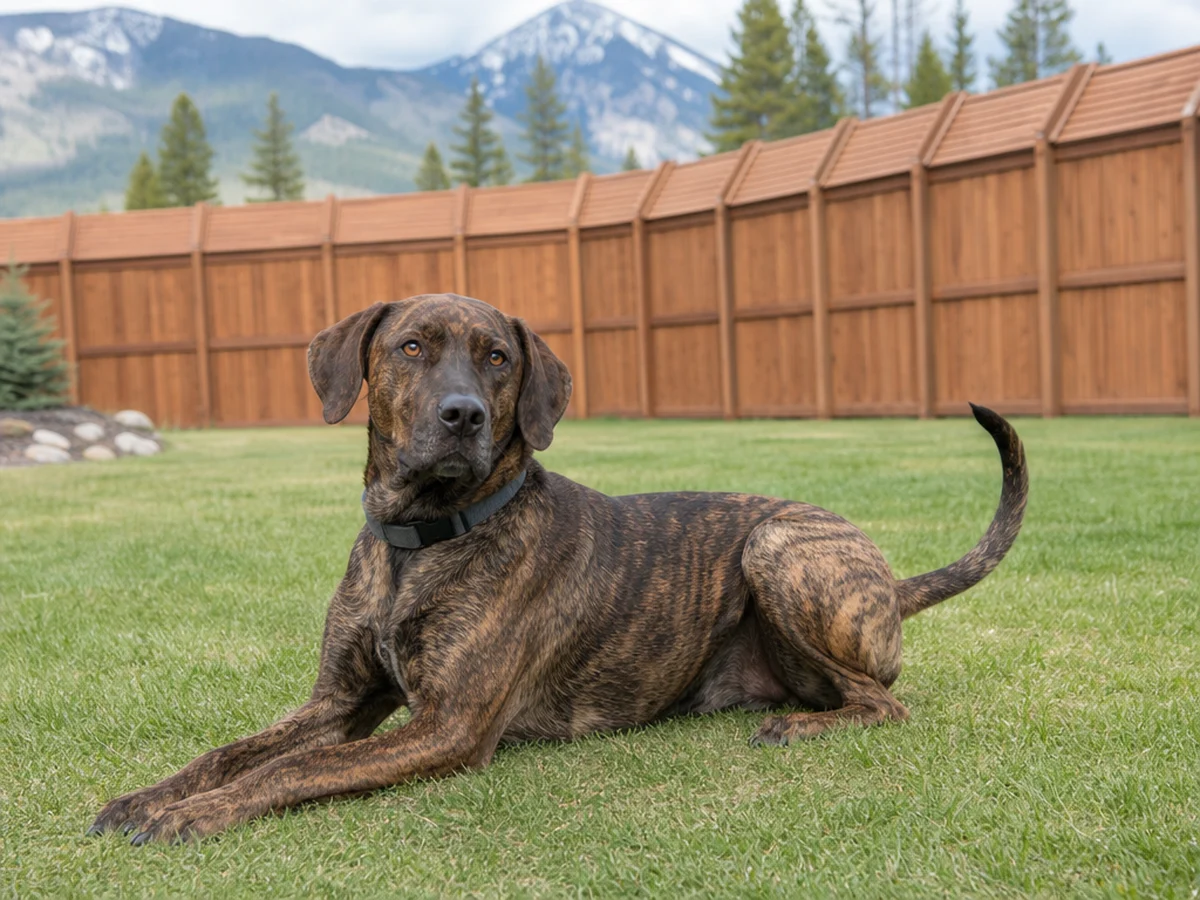
Photograph repaired points and date the inspection. Recheck after storms, frozen ground, landscaping or delivery work. Hardware changes over time, and the Plott should not be the first inspector to discover that a board shifted.
Gate Routes
Use a self-closing gate where practical, a reliable latch and a secondary lock placed so the dog cannot operate it. Remove gaps beside posts and mark a visual gate-check routine for every person who enters.
Fence and Climb Routes
Replace damaged boards or mesh and remove horizontal supports that function as steps. Keep furniture and storage away from the line. If the dog climbs corners, block access until a contractor recommends a secure, lawful design.
Ground and Dig Routes
Inspect the full base, not only the visible hole. Close existing gaps with a safe design appropriate to the property and supervise while soil settles. If digging is a desired activity, offer a separate legal dig area away from the perimeter.
- Walk the entire inside and outside fence line.
- Test every latch and secondary lock by hand.
- Remove climb aids and trim visual access where lawful.
- Check soil changes after rain, yard work or wildlife activity.
Perimeter Training After an Escape
Begin with the dog on a leash several feet inside the repaired boundary. Walk a broad loop and reward orientation toward the handler. Do not lead directly to the old breach or wait for the dog to test it.
Teach a turn-away cue in the center of the yard. Say the cue, move toward the house and reward the dog for following. Practice from several easy angles before using it near the perimeter.
A marker can sharpen the first turn. The Battersea clicker guide emphasizes precise marker timing followed quickly by reinforcement. Mark the head turn, not the moment the dog reaches the door.
Add a station near the door. The dog enters the yard only after a brief check-in and returns to the station before the gate opens. This creates two controlled transitions around the time when human mistakes are most likely.
The Gate Drill Uses Two Adults
One adult handles the dog at the station while another checks and opens the gate. The gate closes before the dog leaves the station. This drill rehearses the real human sequence without placing the dog beside an open route.
Vary the entry point only after the center-yard turn is fluent. Practice from the patio, side door and a quiet central patch, while the old breach remains out of reach. Generalization happens inside the secure area before moving toward the fence.
Short sessions build reliability better than a long patrol. The RSPCA training guide explains that rewards make a behavior more likely. Pay the choice to turn inward before the fence becomes the most interesting part of the yard.
Use Yard Jobs to Pull Activity Inward
A secure yard is not automatic enrichment. Give the Plott a reason to work inward through short food searches, scent trails, toy carries or skill games with a clear finish. Supervision remains active while the job is offered.
Rotate locations away from the fence. Hide food in clean grass near the house, place open boxes on a patio or practice a mat settle in shade. Do not scatter rewards along the perimeter, which can make fence inspection more valuable.
Yard Jobs End Back at the House
Finish each job by moving to the door station, rewarding there and going indoors for a brief reset. The finish keeps the center of activity away from the boundary. It also rehearses the same inward route used during an alert.
Meet exercise and social needs outside the yard too. A yard cannot replace safe walks, training and appropriate companionship. The site's Plott Hound socializing article can help with household dog routines, but yard access still needs separate supervision.
Voice can signal an approaching trigger before an escape attempt. The new Plott training guide separates alert, play, demand and distress channels. Use that information to move the dog indoors early, not to wait for the perimeter rush.
Restore Yard Freedom by Physical Zones
Divide the yard into physical zones based on distance from the house and previous breach points. The first zone stays near the entry under close supervision. Later zones open only after the dog repeatedly turns inward and the hardware remains secure.
- Zone one: leash practice near the house and door station.
- Zone two: supervised movement through the central yard.
- Zone three: brief access nearer the repaired perimeter.
- Full yard: ordinary supervised use with surprise check-ins.
Advance one zone at a time and restore the earlier zone after weather, construction or a new outside trigger changes the yard. Freedom does not become permanent simply because one week went well.
Use cones or another harmless visual marker to remind people where the current zone ends. The dog does not need to understand the marker. It helps the supervising adult maintain the same physical boundary during each session.
Keep a supervision definition. An adult is outside, awake and able to respond, not watching through a window while doing another task. If active supervision is unavailable, the dog remains indoors or uses another secure arrangement.
We recommend regular veterinary visits. A sudden increase in roaming, agitation or disorientation deserves prompt veterinary discussion, especially when it appears without a new yard trigger or routine change.
A Lost-Dog Plan for Climbing and Escaping
If the dog gets out, avoid a loud chase that drives movement farther. Use the practiced turn or recall cue, move away from the dog and offer a worthwhile reward if they orient. Enlist help to control traffic and close routes without surrounding the dog.
After recovery, return to leash-only yard access and inspect the system again. Do not assume the dog now “knows better.” The escape revealed a route or routine that still needs repair, and the payoff may make that route more attractive next time.
Keep an inspection card beside the yard door and date each completed hardware and ground check. Complete one supervised perimeter lap today. Verify every latch, inspect every ground edge and reward three turns toward the house. A secure yard combines sound hardware, clear human routines and repeated inward turns that the Plott can perform before a perimeter rush begins.
 Puppy trainingRedirecting a Black Plott Hound Puppy From Mouthing to Chews
 Training basicsA First Month Training Plan for a Smart, Focused Plott Hound
 Training basicsTraining a Plott Hound to Walk on a Loose Leash Past Smells