 Plott

A Plott Hound's chop or bawl can fill a house, but volume alone does not explain the behavior. The same dog may voice at a window, during play, for attention or when distressed. Each channel has a different payoff, so one universal quiet response is unlikely to solve them all.
In this guide, we will label what happens before and after the sound, change the room, capture the first quiet window and teach an alternative that fits each trigger. across several familiar rooms.
The soundboard separates alert, play, demand and distress channels. It gives the household a practical way to reduce duration while preserving useful communication and a clear route back to rest.
Plott Hound Voice Training Starts With the Channel
The UKC Plott profile describes open trailing voice, bawl and chop, with a clear sound that carries. The AKC breed profile also tells owners to expect the breed's voice in the home at times. Those descriptions provide context, not a requirement to accept nonstop barking.
Voice is functional behavior. A window alert can make a passerby disappear, play barking can keep movement going and demand barking can bring eye contact. Distress vocalization may happen because the dog cannot cope with separation or confinement. Training depends on identifying which result matters to the dog.
Individual Plotts differ. The official Plott Hound standard notes that disposition can vary among strains. Watch the dog in front of you, including posture, movement and recovery, instead of assuming every deep sound means confidence or aggression.
This page focuses on triggers inside the home. The site's Plott apartment barking guide addresses housing fit, neighbors and shared walls. Here, the question is which household channel is active and what behavior can replace it in that room.
Listen for pattern as well as sound. A single carrying alert followed by rest needs less intervention than repeated patrol barking. The household plan should preserve useful communication while making the route back to ordinary behavior clear.
Map the Sound Channel by Room
For three ordinary days, record the room, trigger, first body change and what ended the episode. Do not create extra tests. Natural observations will show whether the dog watches one window, voices when play stops or becomes unsettled around departure cues.
| Sound channel | Likely pattern | First change |
|---|---|---|
| Alert | Fixed location, outside movement, quick launch | Block the view and build a handoff |
| Play | Loose body, bouncing, voice follows motion | Add planned pauses |
| Demand | Looks at person or object, sound brings action | Reward a specific quiet request |
| Distress | Pacing, escape effort, inability to settle | Reduce the trigger and assess the cause |
Record recovery as carefully as the start. A dog who gives two alerts and returns to rest presents a different problem from one who patrols for twenty minutes. The training goal should name the wanted recovery, such as moving to a bed and taking food gently.
Map room acoustics and sightlines too. A narrow hallway can amplify sound, and a couch against a window can create an observation tower. Moving furniture, using privacy film or playing steady background sound may lower the trigger enough for learning.
Check whether the dog has adequate company, exercise and meaningful activity. The RSPCA barking guide notes that bored dogs may bark more. Enrichment supports training, but it does not replace a plan for a specific window or departure trigger.
Quiet-Cue Training Before the Bark
A quiet cue works best when it names a behavior the dog has already practiced. Begin outside a barking episode. Sit in a calm room, wait for the dog to be silent and mark that moment, then place a reward low on a bed or mat.
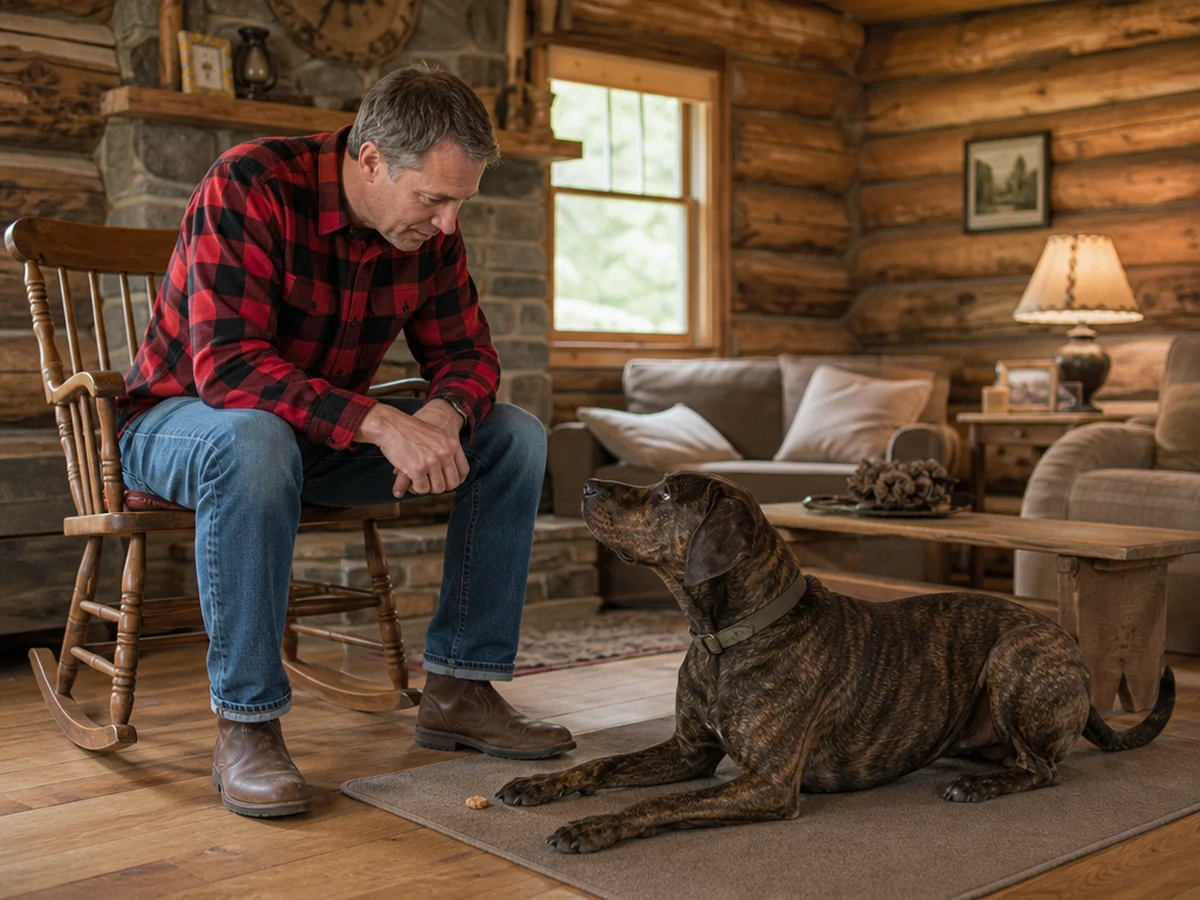
Repeat at different times without staring at the dog. The marker predicts a calm payment, and the mat begins to collect a history of quiet behavior. After several sessions, say “quiet” just before a silence you expect, mark the pause and reward on the mat.
Do not shout the cue over a full bawl. Competing volume can add social energy, and repeated words lose meaning. During an active episode, change distance or block the view first, then use the cue when the dog can orient and breathe.
Quiet Duration Grows Unevenly
Build duration in uneven, manageable pieces. Reward one breath, then three seconds, then one second again. Variable easy repetitions keep the dog successful and prevent the cue from becoming a demand for an impossibly long silence.
Keep rewards calm enough to match the outcome. Tossing food across the room may trigger a chase, while food placed on the mat supports a lowered head. A safe chew can extend settling once the dog has already disengaged from the trigger.
Move the quiet practice into one room at a time. Kitchen silence does not automatically transfer to the window where delivery trucks appear. Restore the easy one-breath criterion whenever the room or trigger changes, then rebuild duration from that successful point.
Window and Door Voice Training
Alert barking often rehearses itself because the outside person keeps moving away. Prevent unsupervised practice by limiting access to the strongest window, closing a curtain or moving the resting place. Management changes what the dog repeatedly learns while a replacement response is built.
Create an alert handoff. Let one or two barks tell you something happened, say a consistent phrase such as “thank you,” then guide the dog away from the view. Reward at a station that is far enough from the window for the body to soften.
- Practice the station route when nothing is outside.
- Add a helper appearing briefly at a generous distance.
- Use the handoff phrase after the dog's first notice.
- Mark movement away and reward at the station.
- End the helper's appearance before barking rebuilds.
If the dog cannot leave the window, increase distance from the helper or block more of the view. The alternative is not fluent at that intensity yet. Dragging the dog away or punishing the warning may increase conflict without changing why the boundary matters.
The ASPCA barking guidance warns that punishing territorial barking can leave the motivation intact. A dog may find another way to control access. Build the handoff and manage the view rather than trying to suppress communication.
Add Pauses to Plott Hound Play Voice
Play voice usually travels with loose movement and quick re-engagement. Schedule pauses before arousal peaks. Stop the toy, become still and mark a brief orientation or softened body, then restart the game as the reward.
Teach the pause in low-energy play first. One short tug is followed by a still toy and a food scatter. Over time, the dog learns that quiet orientation restarts play, while continued barking makes the game remain still for a moment.
Do not remove all vocal play if the household and setting can accommodate it. Set location and time boundaries instead. A basement game in the afternoon may be workable, while the same game beside a shared bedroom wall at night is not.
Use a predictable start and finish ritual for energetic games. Carry the toy to the play area, cue the first round and put it away after the final food search. The ritual helps the dog distinguish invited voice from a demand to restart play throughout the evening.
If play turns stiff, frantic or difficult to interrupt, switch activities. Scatter food, offer water and provide a calm rest period. Raised hair or noise alone does not establish aggression, so read the broader body language described in the site's Plott raised-hackle guide.
Demand Voice and Distress Need Different Training
These channels can sound equally urgent, but their body patterns and consequences differ. Review what happens when the need is met, whether the dog can eat and how quickly ordinary behavior returns before choosing a response.
Demand Voice
Demand barking is directed toward a person or desired object and often stops when the request works. Choose a replacement such as sitting by the door, bringing a toy or standing on a mat. Reward that action quickly enough that silence has a reliable path to the same need.
Everyone must stop paying the old channel. Eye contact, arguing and “just this once” access can all keep demand barking useful. Meet legitimate needs on a routine, then wait for the taught request rather than forcing the dog to escalate.
Post the replacement near the relevant location so people remember it. A small note by the yard door might say “stand on mat, then door opens.” Consistent human timing helps the dog discover one quiet route instead of testing several noisy ones.
Distress Voice
Distress may include pacing, panting, escape attempts, drooling, destruction near exits or an inability to eat. Do not treat those signs as a demand to ignore. Reduce the absence or confinement and gather video if it can be done safely.
The site's Plott calm-alone plan addresses gradual absence work. A dog who injures themself, panics or cannot remain under threshold needs veterinary input and qualified behavior support. More exercise or a louder quiet cue will not resolve panic.
Sudden New Voice
A sharp change in vocalization, sleep, movement or tolerance can have a medical component. Regular veterinary care matters, and a sudden onset deserves prompt discussion. Pain-related sound should not be trained as a household manners problem.
Audit Recovery Across Sound Channels
Count recovery, not only barks. Useful progress includes leaving the window after one cue, offering the mat without guidance, pausing during play and using the replacement request before demand barking begins. A vocal dog may still communicate while becoming much easier to live with.
Compare like triggers. A delivery at the front window is not equivalent to a distant walker behind a fence, even if both produce two barks. Record the location and recovery action so an apparent improvement is not simply a quieter day outside.
Review one room each week. If episodes shrink there, keep the setup stable before expanding to another window or trigger. If they grow, restore management and lower the practice intensity rather than testing whether the dog can handle more.
Recovery Measures for Plott Hound Voice Training
Also track whether the household can respond consistently. A technically good plan will fail if rewards are unavailable or the mat blocks a walkway. Move supplies, shorten the route or select a simpler replacement so people can deliver the same answer in real life.
Choose one sound channel today and write its trigger, payoff and replacement behavior. Then alter the room so the replacement is possible before the next episode. A quieter Plott Hound home grows from many specific recoveries, not from asking a clear, carrying voice to disappear altogether.
 BehaviorBreaking a Plott Hound's Stare at Wildlife and Walking On
 BehaviorHow to Keep a Plott Hound From Climbing and Escaping the Yard
 Puppy trainingRedirecting a Black Plott Hound Puppy From Mouthing to Chews